
Brow Lifts and Forehead Rejuvenation: A Guide to the Different Types
The quest to restore a rejuvenated appearance to the upper face has deep roots in the evolution of cosmetic surgery. The origins of brow lift (also called forehead lift or Browplasty) trace back to the early 20th century. The first documented medical discussion of a forehead lift appeared in 1910 by German surgeon Erich Lexer. Early pioneers like Raymond Passot (in 1919 and the 1930s) described techniques using small elliptical skin excisions above the brows to elevate them and soften crow’s feet. These rudimentary approaches focused primarily on skin removal. By the 1930s, a more comprehensive technique had evolved, commonly referred to today as the coronal approach, becoming the standard brow lift method for decades.
Over time, surgeons refined their understanding of forehead aging, driven not just by skin laxity but by muscle dynamics, tissue descent, and aging changes involving the bone. This led to a more precise shift toward techniques that address the underlying anatomy, with less visible scarring and faster recovery. Today, brow lifts are a cornerstone of upper facial rejuvenation, often combined with other cosmetic facial procedures such as facelift and eyelid surgery to create balanced, natural results.
Key Takeaways: Brow Lifts and Forehead Rejuvenation
- Brow aging is more than skin laxity. Descent of the brow results from muscle imbalance (frontalis elevator vs. depressor muscles like corrugator, procerus, and orbicularis), tissue ptosis, volume loss, and laxity along the temporal fusion line. True rejuvenation requires anatomical release of the periosteum, modulation of depressor muscles, and stable repositioning, not just skin removal.
- Techniques have evolved for better results and less downtime. The classic coronal (full-scar) brow lift offers powerful lift but involves a longer incision and higher risk of visible scarring, hairline changes, or numbness. Modern endoscopic approaches use small hidden incisions, an endoscope for precise dissection, and internal bio-absorbable fixation, delivering natural elevation with minimal scarring, preserved hairline, and faster recovery.
- Custom variations match your unique needs.
- Pretrichial/Trichophytic – ideal for high foreheads; excises excess skin while preserving or lowering the hairline.
- Temporal/Lateral – targets outer brow descent (often combined with blepharoplasty) for a refreshed, non-tired look.
- Direct/Mid-Forehead – provides precise control for heavy male brows or deep rhytids when scars can be concealed in natural creases.
- Brow position directly affects eyelid appearance. Brow ptosis often creates “pseudoptosis” (hooded lids from brow weight). A manual brow elevation test during consultation reveals whether a brow lift (alone or with blepharoplasty) is needed. Performing the brow lift first prevents over-resection of lid skin and ensures natural eye closure and balanced results.
- No one-size-fits-all solution. The best technique depends on your degree of ptosis, hairline position, skin quality, gender-specific brow aesthetics, and overall facial rejuvenation goals. Today’s anatomically precise methods deliver longer-lasting, natural outcomes with minimized scarring and recovery time.
- Choose your surgeon wisely. Consult only board-certified plastic surgeons who demonstrate expertise in both brow lifts and blepharoplasty. A surgeon focused solely on eyelids may overlook brow contribution, leading to incomplete or unbalanced rejuvenation. Proper evaluation ensures your upper-face results look refreshed, alert, and harmonious.
Anatomy of the Forehead and Brow: The Foundation for Effective Lifting
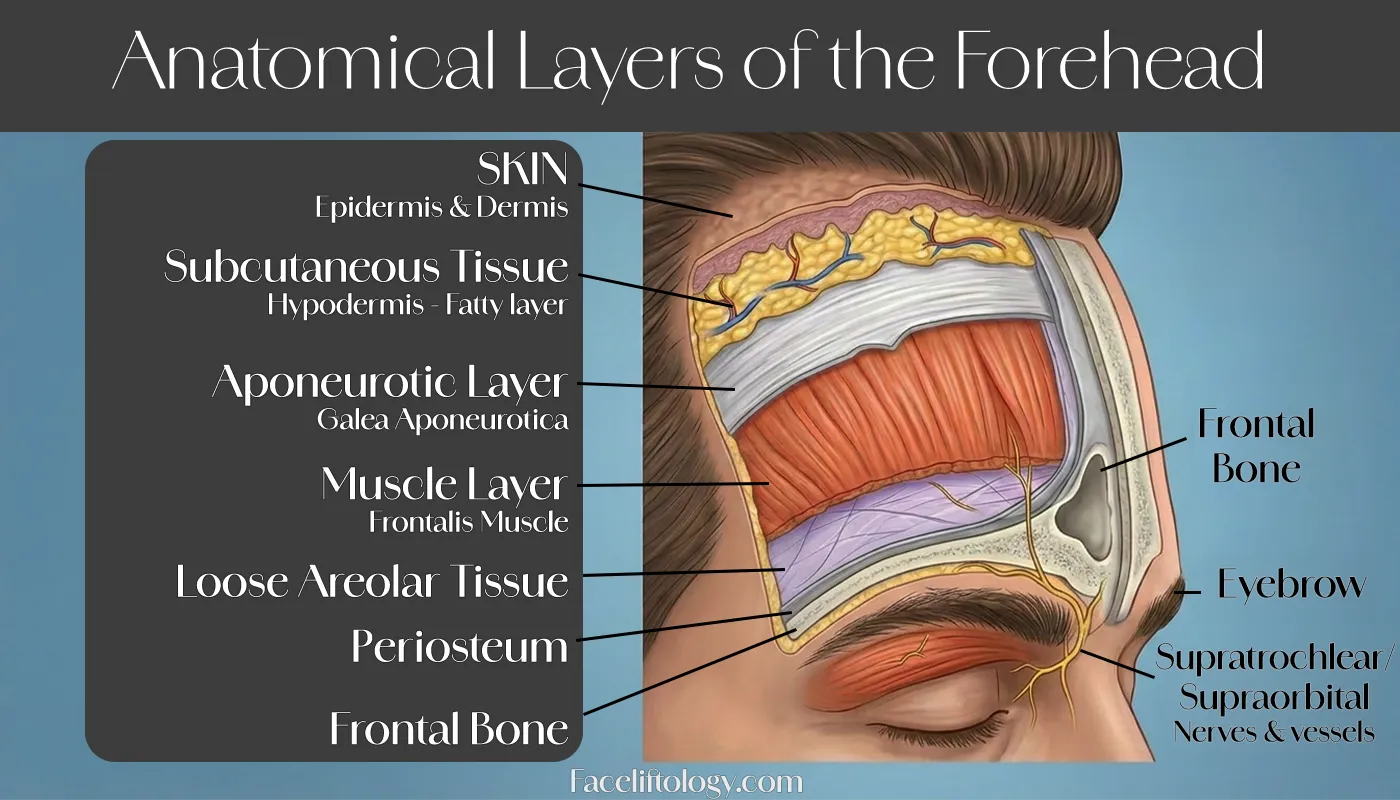
Understanding the layered anatomy can be helpful to deciding which brow lift or forehead procedure is right for you. The forehead consists of five main layers: skin, subcutaneous tissue, frontalis muscle (within the galea aponeurotica), loose areolar tissue, and periosteum over the frontal bone.
- Frontalis muscle: The sole elevator of the brow. It originates from the galea and inserts into the brow skin, raising the eyebrows and creating horizontal forehead lines when active.
- Brow depressors: These oppose the frontalis and contribute to frown lines and brow descent with age. Key muscles include the corrugator supercilii (vertical and oblique heads, creating vertical glabellar lines), procerus (transverse nasal root lines), depressor supercilii, and the medial/lateral orbicularis oculi.
- Brow position and aesthetics: The youthful appearing female brow typically arches above the supraorbital rim, peaking near the lateral limbus and tapering laterally. Male brows sit flatter and at or just above the orbital rim. Aging causes brow ptosis due to gravity, muscle imbalance, volume loss, and laxity in the galea and temporal fusion line (where the frontalis meets the temporalis fascia).
Critical structures include the supraorbital and supratrochlear nerves (sensation), the sentinel vein (near the temporal fusion line), and the periosteum, which must often be released for effective elevation. These anatomical realities explain why simply removing skin (as in early techniques) often fails to deliver lasting results. True rejuvenation requires muscle modulation, tissue release, and stable repositioning.

Traditional Coronal Brow Lift (Full-Scar Technique)
The classic open coronal brow lift involves a long incision placed several centimeters at or behind the hairline, extending ear-to-ear across the scalp. Surgeons elevate the forehead flap in the subgaleal or subperiosteal plane, excise excess skin and scalp, weaken or resect depressor muscles (corrugators, procerus), and secure the elevated brow. This technique provides powerful, predictable lift and broad access for muscle work.
Advantages: Excellent for significant ptosis, deep forehead rhytids, or patients with high hairlines (though it can raise the hairline further). It remains a reliable option in select cases requiring substantial rejuvenation.
Considerations: The longer scar carries risks of alopecia, scalp numbness (from nerve disruption), altered hairline position, and more visibility. Recovery involves more swelling and a higher chance of visible changes in hair-bearing areas. It is more invasive than modern alternatives and is less commonly performed today as primary technique due to these trade-offs.
Endoscopic Brow Lift: A Minimally Invasive Evolution
In the early 1990s, Dr. Luis O. Vasconez pioneered the endoscopic brow lift, introducing small (typically 2–5) incisions hidden within the scalp and using an endoscope with specialized instruments for visualization and dissection.
The procedure involves subperiosteal release of the forehead and temporal regions, division of the temporal fusion line and lateral orbital periosteum, and selective weakening of depressor muscles. Fixation (bio-absorbable sutures, screws, or devices) holds the brow in its new position while healing occurs. No large segment of scalp skin is removed, and the lift comes from tissue release and muscle balance. The bio-absorbable screws and sutures are all internal, and dissolve in a few months. The incisions are usually less than 2 centimeters each and hidden in the scalp with little to no hair loss.
Advantages: Minimal scarring, preserved hairline, reduced numbness and alopecia risk, shorter recovery, and natural results. It excels for moderate brow ptosis and forehead rejuvenation.
Considerations: Best suited for patients without extreme skin excess or very high hairlines. Long-term stability relies on proper periosteal release and muscle modulation rather than pure mechanical tension.
Other Brow Lift Variations: Customized Solutions for Different Aesthetic Goals
Beyond the traditional coronal and endoscopic approaches, several specialized brow lift variations allow surgeons to precisely match the procedure to a patient’s unique forehead anatomy, hairline position, skin quality, gender-specific brow aesthetics, degree of ptosis, and individual aesthetic goals. These techniques incorporate the same foundational steps of periosteal release along the supraorbital rim and arcus marginalis, modulation of the brow depressor muscles (corrugator, procerus, and orbicularis), and stable tissue suspension, while differing primarily in incision placement and extent of skin management.
Temporal / Lateral Brow Lift
The temporal brow lift, also known as a lateral brow lift, is a targeted, minimally invasive option with small (typically 1.5–4 cm) incisions hidden within the temporal hairline to focus elevation on the outer third of the eyebrow. Through a subcutaneous or subperiosteal dissection, the surgeon releases the lateral temporal fusion line and suspends the temporoparietal fascia in a superolateral vector, effectively correcting lateral brow descent that contributes to hooding over the outer eyelid and a tired or sad appearance. It is frequently combined with upper blepharoplasty or an endoscopic central brow lift for harmonious full-upper-face rejuvenation. Patients benefit from minimal scarring, shorter operative time, and faster recovery, making it an ideal choice for those whose primary concern is isolated lateral ptosis rather than central forehead aging.
Direct or Mid-Forehead Brow Lift
The direct brow lift places the incision immediately above the eyebrows, while the mid-forehead variant utilizes one or more deep horizontal creases in the central forehead. These approaches can afford direct access to the brow depressors and frontalis muscle insertions, allowing millimeter-level control over brow height, shape, and contour without relying on distant suspension. They are especially valuable for select male patients with heavy, flat brows, deep forehead rhytids, receding hairlines, or facial nerve-related asymmetry, where scars can be well concealed within natural creases or thick brow hair.
Because the incisions are more exposed than hairline approaches, these techniques are reserved for individuals who prioritize strong, predictable lift and functional improvement over absolute scar concealment.
Pretrichial / Trichophytic Brow Lift
This open technique places the incision either directly along the anterior hairline (pretrichial) or 3–4 mm behind it with a carefully beveled cut (trichophytic) that preserves hair follicles for optimal camouflage. It enables direct excision of excess forehead skin and subcutaneous tissue while elevating the entire brow–forehead unit, delivering elevation and smoothing of horizontal rhytids. The approach is ideal for patients with a high forehead who want to preserve or even lower their hairline position, unlike the coronal lift, which typically raises it. It can provide control over brow arch, symmetry and can be particularly useful when moderate to significant skin redundancy must be addressed alongside brow ptosis.
Brow Lift Techniques: A Side-by-Side Comparison
To help readers quickly grasp the differences among brow and forehead lift options discussed in this article, the table below summarizes the five primary surgical approaches. It highlights how each technique addresses forehead and brow anatomy (frontalis elevation, depressor muscle balance, and periosteal release), hairline position, recovery, and suitability, especially when combined with upper eyelid surgery or ptosis correction. Selection always depends on individual factors such as degree of brow ptosis, skin laxity, forehead height, gender-specific aesthetics, and whether true eyelid ptosis or pseudoptosis is present.
| Technique | Incision Location | Scar Visibility | Effect on Hairline | Typical Recovery Time | Best Suited For | Main Advantages | Main Considerations / Risks |
|---|---|---|---|---|---|---|---|
| Traditional Coronal (Full-Scar / Open) | Ear-to-ear across scalp, 2–4 inches behind hairline | Hidden in hair but long scar | Raises hairline (may lengthen forehead) | 2–4 weeks | Severe brow ptosis, deep forehead rhytids, low hairline | Powerful, durable lift; excellent access for muscle resection and tissue excision | Higher risk of scalp numbness, alopecia, longer downtime; more invasive |
| Endoscopic (pioneered by Dr. Luis Vasconez) |
3–5 small (≈1 inch) ports hidden in the scalp | Minimal, well concealed | Usually preserved | 7–14 days | Mild to moderate ptosis, good skin elasticity | Minimally invasive; shorter recovery; less numbness; natural results with proper fixation | May require strong fixation (e.g., Endotine or bone tunnels); less ideal for extreme skin excess |
| Pretrichial / Trichophytic | At or just in front of (or slightly behind) front hairline | Low, camouflaged by hair | Can preserve or lower high hairline | 10–21 days | High forehead + moderate-to-severe ptosis | Allows skin removal for strong lift; maintains or shortens forehead height | Potential visible scar if healing is suboptimal; some numbness possible |
| Temporal / Lateral | Small incisions within temporal hairline | Minimal | Minimal change | 5–10 days | Isolated lateral (outer) brow descent | Quick, targeted; often combined with blepharoplasty for harmonious eyelid rejuvenation | Limited to lateral brow only; not for central/medial ptosis |
| Direct / Mid-Forehead | Directly above brow or within deep forehead crease | More visible (camouflaged in crease or by thick brows) | None | 7–14 days | Men with prominent brows or deep rhytids; severe localized ptosis | Precise control over brow shape and height; direct access | Highest risk of visible scarring; best for patients who prioritize lift over scar concealment |
This comparison table serves as a practical companion to the full article on the origins, anatomy, and considerations of brow and forehead rejuvenation. No single technique is universally “best.” A board-certified plastic surgeon’s anatomical evaluation determines the optimal approach to achieve the patient’s specific rejuvenation needs.
Brow Lift and Upper Eyelid Surgery: Key Considerations, Including Ptosis
Brow position and upper eyelid appearance are intimately linked. Descent of the brow can create or worsen the appearance of heavy, hooded lids. This is often called pseudoptosis (apparent droop from brow weight) versus true ptosis (levator muscle dysfunction causing the eyelid margin itself to sit low).
Clinical evaluation is critical: Surgeons perform a manual brow elevation test during consultation. If lifting the brow significantly improves upper eyelid hooding, then it can be concluded that brow ptosis is a primary contributor. Proceeding with upper blepharoplasty (removal of excess lid skin/fat) alone in these cases may lead to incomplete correction, rapid recurrence of heaviness, or unnatural results. Conversely, addressing the brow first (or in combination) often reveals whether additional lid skin needs removal, preventing over-resection that could cause lagophthalmos (inability to close the eyes fully).
Pro Tip from a Plastic Surgeon: If, during consultation, the surgeon does not properly evaluate for brow ptosis, seek other opinions. Addressing upper eyelid correction when a brow lift might be indicated can lead to an unbalanced appearance. Once too much skin is removed from the upper eyelids, a subsequent brow lift may be impossible. For this reason, when both procedures are scheduled, the brow lift is always performed FIRST in the operating room, then the upper eyelid correction. This allows for adequate skin excision without over-doing-it, so that the eyes will close fully.
A brow lift may be recommended:
- To correct brow ptosis that contributes to functional or aesthetic upper lid issues.
- In conjunction with blepharoplasty for harmonious upper-face rejuvenation.
- Sometimes as a standalone procedure when lid skin excess is minimal, but brow descent is the dominant aging sign.
True eyelid ptosis repair (levator advancement or resection) can be performed simultaneously if needed, but it is a distinct procedure from dermatochalasis correction or brow elevation. Combining procedures requires precise planning to maintain natural eye aperture, symmetry, and function.
Choosing the Right Approach
No single technique suits every patient. Selection depends on degree of ptosis, hairline position, skin quality, gender-specific brow aesthetics, and whether the procedure is standalone or part of broader facial rejuvenation. Modern approaches emphasize anatomical precision over aggressive skin excision. This yields longer-lasting, more natural outcomes with minimized downtime.
Brow and forehead lifts restore an open, alert expression while addressing dynamic lines and structural descent. As with all facial rejuvenation, a thorough anatomical evaluation by a qualified plastic surgeon ensures the procedure aligns with your individual aging pattern and goals.
Pro Tip from a Plastic Surgeon: When obtaining consultations and recommendations for upper face rejuvenation, please consult with only board-certified plastic surgeons, specifically plastic surgeons that demonstrate expertise in both procedures: brow lift and blepharoplasty. Why? Because a surgeon that only specializes in eyelid surgery may dismiss the need for a brow lift procedure.
- Vasconez LO, Core GB, Gamboa-Bobadilla M, Guzman G, Askren C, Yamamoto Y. Endoscopic techniques in coronal brow lifting. Plast Reconstr Surg. 1994;94(5):788-793. (Original description of the endoscopic approach.)
- Paul MD. The evolution of the brow lift in aesthetic plastic surgery. Plast Reconstr Surg. 2001;108(5):1409-1424.
- Raggio BS, Winters R. Endoscopic Brow Lift. In: StatPearls. Treasure Island (FL): StatPearls Publishing; 2025. (Comprehensive overview of technique, fixation, and anatomy.)
- De Jong R, Hohman MH. Brow Ptosis. In: StatPearls. Treasure Island (FL): StatPearls Publishing; 2023. (Detailed review of brow ptosis pathophysiology and surgical options.)
- Malata CM, et al. Experience with cortical tunnel fixation in endoscopic brow lift. J Plast Reconstr Aesthet Surg. 2009;63(2):e142-e147. (Clinical outcomes of bone-tunnel suture fixation.)
- Caceres H, et al. Fixation Techniques Across Endoscopic Brow Lifts: A Systematic Review. Aesthet Surg J Open Forum. 2025. (Comparative safety and efficacy of Endotine, screws, and tunnels.)
- Lyon DB. Upper Blepharoplasty and Brow Lift: State of the Art. Semin Plast Surg. 2010;24(3):196-204. (Focus on combined procedures and ptosis differentiation.)
- Ellenbogen R. Transcoronal eyebrow lift with concomitant upper blepharoplasty. Plast Reconstr Surg. 1983;71(3):490-499. (Early integration of brow lift with eyelid surgery.)
- Knize DM. An anatomically based study of the mechanism of eyebrow ptosis. Plast Reconstr Surg. 1996;97(6):1179-1187. (Detailed periosteal and ligamentous anatomy.)
- Atiyeh BS, et al. Forehead Eyebrow Lift Techniques: Review of the Literature. Plast Reconstr Surg Glob Open. 2026;14(3):e20. (Modern comparison of techniques including pretrichial and endoscopic.)
About the Author
Dr. Paul S. Howard is a retired, board-certified plastic surgeon who specialized in both reconstructive and cosmetic plastic surgery procedures. Over the course of his career, he earned national recognition for his surgical skill, commitment to patient care, and contribution to the advancement of plastic surgery techniques. Dr. Howard received world-class training under two legendary pioneers in the field: Dr. Ralph Millard, a leader in cleft and craniofacial surgery, and Dr. Paul Tessier, widely regarded as the father of modern craniofacial surgery. Their influence helped shape Dr. Howard’s meticulous, patient-focused approach to surgery and deepened his lifelong passion for medical history, especially the history of plastic surgery.
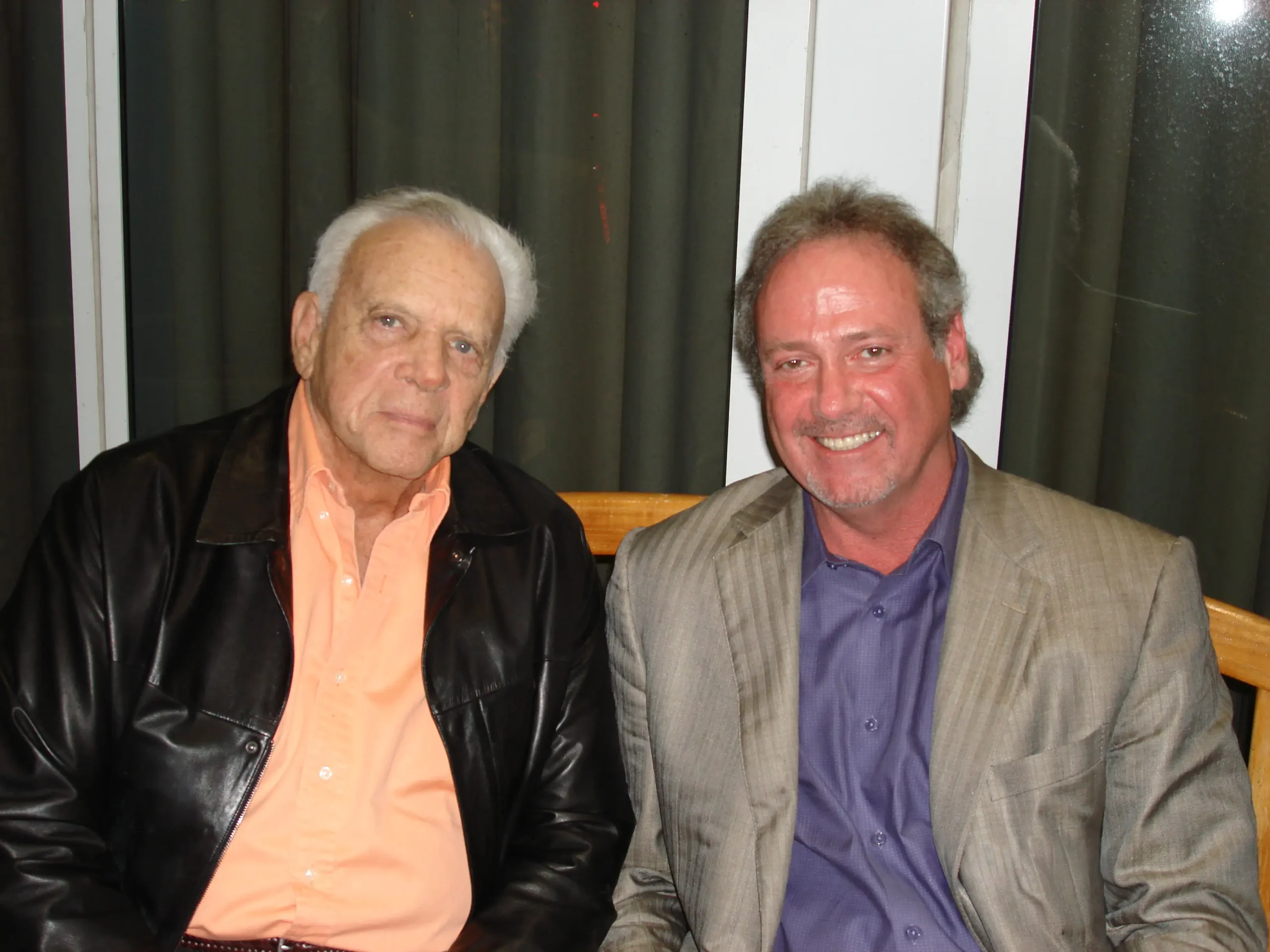
Dr. Ralph Millard & Dr. Paul S. Howard
Medical Disclaimer – Faceliftology®
The information provided on Faceliftology® is intended for general educational and informational purposes only and reflects general medical concepts related to facial aging and facelift procedures. It is not intended to constitute medical advice, diagnosis, or treatment recommendations, nor does it establish a physician–patient relationship.
Faceliftology® is an independent educational platform. Any medical or surgical information presented, including content that is reviewed or contributed to by a physician, is provided in a general context and does not represent individualized medical guidance.
Facelift surgery and related facial procedures involve highly individualized decision-making based on a patient’s anatomy, medical history, surgical technique, and overall health status. Outcomes, recovery timelines, and healing responses vary significantly between individuals and cannot be predicted or guaranteed.
Discussion of surgical techniques, adjunctive therapies, recovery strategies, nutritional considerations, or postoperative care reflects general principles described in clinical practice and medical literature. Such information does not imply that any specific approach is appropriate, necessary, or effective for a particular patient.
Users of this website should not rely on any content as a substitute for consultation with a qualified healthcare provider. All medical decisions, including whether to undergo surgery or pursue any aspect of preoperative or postoperative care, should be made in direct consultation with a board-certified plastic surgeon or other appropriately trained medical professional.
By using this website, you acknowledge that any reliance on the information provided is at your own discretion and risk.
Faceliftology® does not endorse or promote any specific treatment, provider, product, or technique unless explicitly stated. Inclusion of information does not imply superiority over other medically accepted approaches.
In the event of a medical concern, complication, or unexpected symptom, individuals should seek prompt evaluation by their surgeon or a qualified healthcare provider.
Content on this website may not reflect the most current medical developments and should not be interpreted as comprehensive or definitive medical guidance.