
A Discussion About Why I Changed to the Local Anesthesia Facelift
After performing hundreds of facelifts under general anesthesia early in my career, I made a deliberate shift. For roughly the next fifteen years I performed well over 1,500 facelifts under local anesthesia (with oral sedation). The change was not driven by convenience for the surgeon. My switch from general anesthesia to local anesthesia was driven by what I observed in recovery rooms and at postoperative visits: patients needed the same surgical result with less swelling, less bruising, and an overall faster recovery.
The question that guided the change was straightforward. What factors most strongly influence postoperative swelling, bruising, hematomas, seromas, and overall recovery complications? Experience pointed repeatedly to general anesthesia itself.
Hematoma Rates in Two Large Series
In more than 500 facelifts performed under general anesthesia, I recorded 14 hematomas. In more than 1,500 facelifts performed under local anesthesia, I recorded only three. Of those three, one patient had continued taking Goody’s powders (which contain aspirin) without realizing it; another was a body-builder who returned to heavy gym activity too soon. The remaining difference is difficult to attribute to chance or patient selection alone.
The most consistent factor I observed was blood-pressure control. Under general anesthesia, blood pressure is pharmacologically managed during the case. When the patient emerges, a rise in blood pressure is common. That rebound, combined with residual vasodilating effects of many anesthetic agents, creates a window in which small vessels can bleed into the surgical plane. Local anesthesia with carefully controlled sedation avoids that physiologic stress. Blood pressure remains closer to the patient’s own baseline throughout the procedure and in the immediate recovery period.
I would stage the local anesthesia injections during the procedure to keep any spikes in blood pressure to a minimum. The injections were done slowly, and I perfected a local injection protocol that consisted of three different local anesthetic agents.
Same Technique, Different Recovery Profile
The surgical goals did not change. I continued to perform the same SMAS and deep-plane work I had refined under general anesthesia. What changed was the physiologic environment in which that work occurred and the subsequent inflammatory response. Patients under local anesthesia consistently showed less early edema and less ecchymosis. The incidence of seromas and secondary healing problems also declined.
All patients, regardless of anesthetic technique, received the same postoperative medication protocol: a low-dose narcotic (Norco or Lortab 5 mg), a Medrol Dosepak, an antibiotic, and ondansetron (Zofran) as needed. All were instructed to begin bromelain preoperatively and Arnica postoperatively. The only major variable that differed was the anesthetic method. The improvement in recovery therefore tracked with that single change.
What I Observed in Recovery Timelines
The difference in recovery timelines was one of the most obvious observations in my practice.
For patients undergoing facelifts under general anesthesia, I routinely advised them to prepare for a 4- to 6-week period before they would feel comfortable being fully “presentable” in social or professional settings. I did not permit the use of makeup for at least 3 to 4 weeks. Residual bruising and lingering edema made earlier camouflage unpredictable.
After the transition to local anesthesia, the recovery curve shifted. I told these patients not to expect to be presentable for at least 2 to 3 weeks. By the two-week mark I was sometimes willing to clear a patient to wear makeup depending on their healing progression of incisions and bruising.
Comfort Versus Expediency
General anesthesia can make the operative day more predictable for the surgical team. The patient is completely still; the airway is controlled; the surgeon can work without concern for patient movement or intermittent discomfort. Those advantages are real. They are also primarily advantages for the surgeon and the operating-room schedule. When the priority is shifted to the patient’s experience in the first two weeks after surgery, the calculus changes.
Local anesthesia, properly administered, allows the patient to remain calm, breathe spontaneously, and avoid the residual effects of deeper agents. Most patients describe the experience as tolerable rather than painful. More importantly, they leave the recovery area clearer-headed and with less tissue trauma to resolve in the days that follow, with no fluctuations in blood pressure.
The Role of Drains: Controlling Dead Space
A related technical point that often causes confusion is the use of drains. I continued to place drains in essentially every facelift, whether performed under general or local anesthesia. The purpose, however, was not what many patients (and some surgeons) assume.
Drains are not placed primarily to suction out all of the blood. Residual blood and edema will still be present. The most important function I found was the controlled suction of air from the dead space created by the surgical elevation of the skin and soft tissues. When that air is removed, the two tissue layers are brought into gentle apposition. With no residual space left in which fluid can collect, the opportunity for hematoma or significant seroma formation is reduced.
Large, thick drains are unnecessary for this purpose and can themselves contribute to edema and patient discomfort. I preferred a small-caliber drain, specifically a TLS drain, precisely because it was sufficient to evacuate air and allow the tissue planes to coapt without adding bulk or trauma. These small drains were used identically in both my general-anesthesia and local-anesthesia procedures.
In nearly every case, I removed the drains the day after surgery. Only rarely did I find that they needed to remain longer than a few days. Early removal was the rule once the dead space had been controlled and the initial fluid output had slowed.
Practical Implications for Patients
A facelift performed under local anesthesia is not a “mini” procedure or a compromise in longevity of result when the same anatomic work is done. It is a different delivery system for the same operation, chosen specifically to reduce the physiologic insults that drive swelling, bruising, and hematoma risk. Patients still require the same careful preoperative screening, the same meticulous hemostasis, and the same disciplined postoperative care. What they gain is a recovery curve that is, in most cases, gentler and faster.
This approach is not suitable for every patient or every surgeon. It demands a different operating-room rhythm and a willingness to talk with the patient throughout the procedure. It also requires the surgeon to accept that the primary measure of success is not how quickly the case is completed, but how the patient looks and feels at one week, two weeks, and one month.
After more than two thousand facelifts, the data and the clinical observations aligned. When the goal is a result that looks natural and a recovery that returns the patient to ordinary life as promptly as possible, local anesthesia, in experienced hands, offers a clear advantage.
A list of peer-reviewed academic sources on local anesthesia (or tumescent/awake) facelifts:
- Facelift Performed Safely With Local Anesthesia and Oral Sedation: Analysis of 174 Patients
- Awake Rejuvenation With the Deep Plane Face Lift and Extended Deep Neck Contouring
-
High Superficial Musculoaponeurotic System Lamellar Facelift Under Local Anesthesia
About the Author
Dr. Paul S. Howard is a retired, board-certified plastic surgeon who specialized in both reconstructive and cosmetic plastic surgery procedures. Over the course of his career, he earned national recognition for his surgical skill, commitment to patient care, and contribution to the advancement of plastic surgery techniques. Dr. Howard received world-class training under two legendary pioneers in the field: Dr. Ralph Millard, a leader in cleft and craniofacial surgery, and Dr. Paul Tessier, widely regarded as the father of modern craniofacial surgery. Their influence helped shape Dr. Howard’s meticulous, patient-focused approach to surgery and deepened his lifelong passion for medical history, especially the history of plastic surgery.
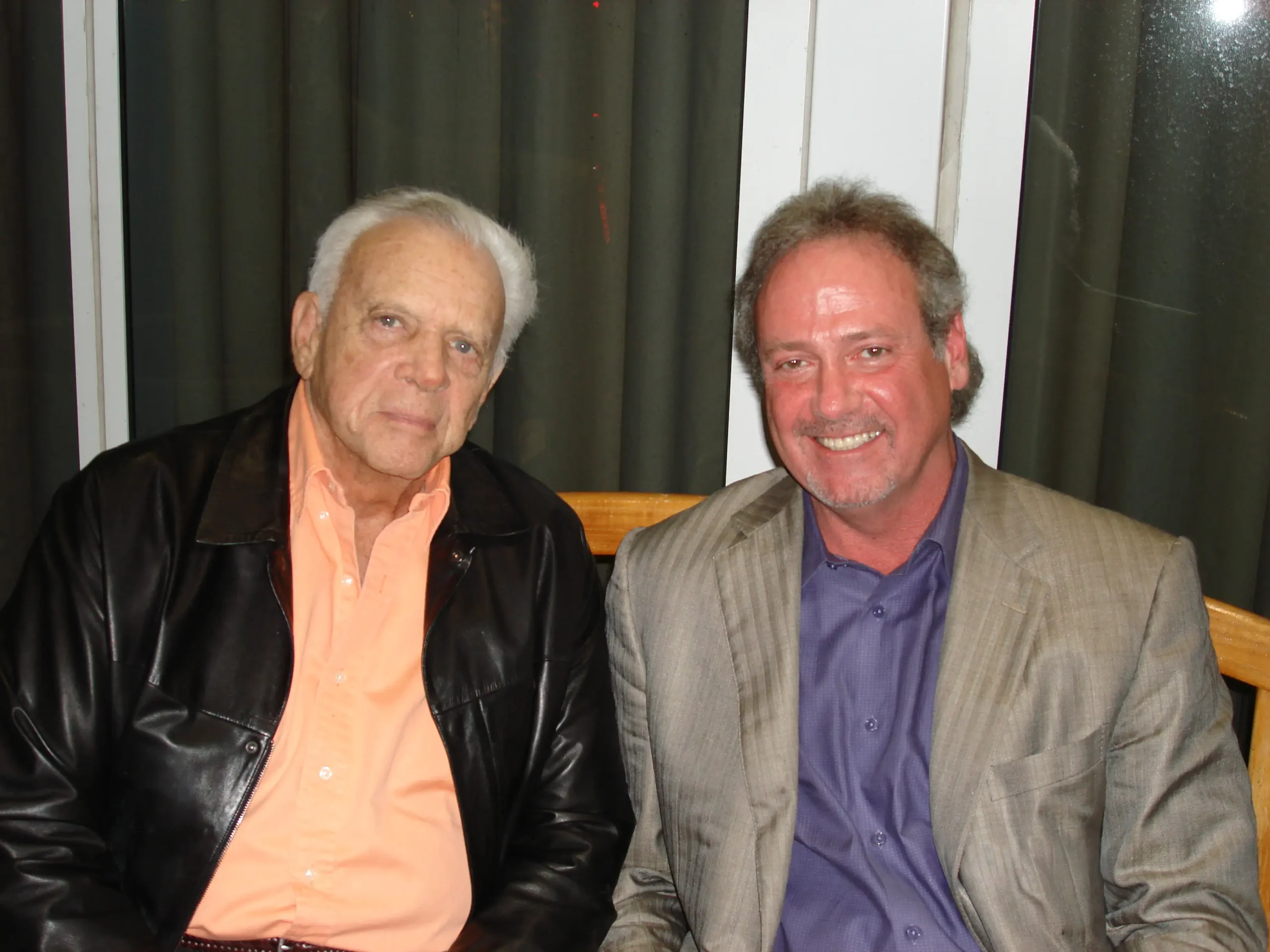
Dr. Ralph Millard & Dr. Paul S. Howard
Medical Disclaimer – Faceliftology®
The information provided on Faceliftology® is intended for general educational and informational purposes only and reflects general medical concepts related to facial aging and facelift procedures. It is not intended to constitute medical advice, diagnosis, or treatment recommendations, nor does it establish a physician–patient relationship.
Faceliftology® is an independent educational platform. Any medical or surgical information presented, including content that is reviewed or contributed to by a physician, is provided in a general context and does not represent individualized medical guidance.
Facelift surgery and related facial procedures involve highly individualized decision-making based on a patient’s anatomy, medical history, surgical technique, and overall health status. Outcomes, recovery timelines, and healing responses vary significantly between individuals and cannot be predicted or guaranteed.
Discussion of surgical techniques, adjunctive therapies, recovery strategies, nutritional considerations, or postoperative care reflects general principles described in clinical practice and medical literature. Such information does not imply that any specific approach is appropriate, necessary, or effective for a particular patient.
Users of this website should not rely on any content as a substitute for consultation with a qualified healthcare provider. All medical decisions, including whether to undergo surgery or pursue any aspect of preoperative or postoperative care, should be made in direct consultation with a board-certified plastic surgeon or other appropriately trained medical professional.
By using this website, you acknowledge that any reliance on the information provided is at your own discretion and risk.
Faceliftology® does not endorse or promote any specific treatment, provider, product, or technique unless explicitly stated. Inclusion of information does not imply superiority over other medically accepted approaches.
In the event of a medical concern, complication, or unexpected symptom, individuals should seek prompt evaluation by their surgeon or a qualified healthcare provider.
Content on this website may not reflect the most current medical developments and should not be interpreted as comprehensive or definitive medical guidance.