
A Guide to Finding the Right Facelift for You
When you start exploring facelift options, it’s natural to wonder which approach will give you the most natural, refreshed result. The answer isn’t about choosing the “best” facelift but about choosing the one that fits how your face has changed over time.
Small differences matter, including:
- Where changes are most noticeable (jawline, cheeks, or neck)
- How much support the underlying structures need
- And the level of correction required to restore balance without looking overdone
Procedures like the mini facelift, SMAS facelift and deep plane facelift are designed with these differences in mind. Each approach addresses a specific pattern of aging, which is why the right choice is always a personalized one and not a one-size-fits-all solution.
Key Takeaways: Choosing the Right Facelift for You
- There is no one-size-fits-all facelift. The right approach depends on how your face has aged, not just the name of the procedure.
- Facial aging happens at multiple layers. Changes in the skin, fat and deeper support structures all contribute to what you see in the mirror.
- The biggest difference between facelift types is depth.
Mini facelifts address surface-level changes, SMAS facelifts reposition deeper structures, and deep plane facelifts treat more advanced, multi-layer aging. - Your specific concerns help guide the right procedure.
Jawline softening, cheek descent, and neck changes each point toward different surgical approaches. - Procedure names can be misleading.
Some facelifts are marketed with unique or branded names, but what matters most is what the surgery does beneath the surface. - Natural results come from the right level of correction.
The goal is not to look overdone, but to restore balance and create a refreshed, natural appearance. - Your consultation should focus on your goals.
Understanding what you want to improve and what’s realistically achievable is key to choosing the right approach. - Surgeon selection is just as important as the procedure.
Board certification, experience and technical expertise all play a major role in your outcome.
How Your Face Ages (And Why It Matters for Your Results)
Facial aging doesn’t happen in just one layer, but across multiple layers of the face at the same time. Over time, you may notice:
- Skin becoming looser and less elastic
- Fat shifting downward, affecting facial contours
- Support structures weakening, leading to loss of definition
- Muscles and neck bands becoming more visible
- Subtle softening along the jawline or early jowls
- Flattening of the cheeks with deeper folds
- Fullness or banding in the neck
Because these changes vary from person to person, and often occur at different depths, the right facelift isn’t one-size-fits-all. It’s a customized approach based on your anatomy and how your face is aging.
The Key Difference Between Facelift Types
The biggest difference between facelift procedures is how deep they work beneath the skin.
Mini Facelift (Surface-Level Correction)
- Focus: Skin and some SMAS tissue tightening
- Best for: Early aging
- Goal: Subtle contour improvement
SMAS Facelift (Structural Support)
- Focus: Skin + SMAS layer (deeper support layer)
- Best for: Moderate aging and jowling
- Goal: Longer-lasting jawline and lower face improvement
Deep Plane Facelift (Advanced Structural Repositioning)
- Focus: Beneath the SMAS + ligament release
- Best for: Deeper aging
- Goal: Natural, comprehensive lifting of cheeks, folds & jawline
A Comparison of Facelift Types
Why Facelift Names Can Be Misleading
If you’ve been researching facelift options, you’ve likely come across a wide range of terms, some familiar and others that sound highly specialized or even proprietary.
Common labels include:
- “Mini facelift”
- “Full facelift”
- “Advanced facelift”
- Branded or custom-named facelifts unique to a specific surgeon or practice
While these names can be helpful at a basic level, they are not always standardized across the field of plastic surgery. In many cases, surgeons develop their own terminology as part of branding or marketing. These names can make a procedure sound new or unique, even when it is based on well-established techniques such as a traditional facelift or deep plane facelift.
This can unintentionally create confusion for patients, leading to the impression that one procedure is fundamentally different, or more advanced, based on its name alone.
It’s also important to understand that:
👉 Two surgeons may use the same term but perform very different techniques
👉 Or use different names for procedures that are anatomically similar
For this reason, the most meaningful way to compare facelift options is not by what they’re called, but by what they actually do beneath the surface.
Understanding this helps you look past marketing language and focus on what truly impacts your results: the depth of correction, the structures being treated, and the surgeon’s technical approach.
The Real Goal: Natural, Balanced Results
When people start researching facelifts, it’s easy to assume the “best” option is the most advanced, the most talked about, or the most aggressive. In reality, that’s not what creates the best outcome.
A successful facelift is one that’s tailored to your rejuvenation goals, your anatomy, your pattern of aging and the specific areas that need support. It should address the right depth, restore structure where it’s been lost, and create a smooth, balanced transition between the face and neck. The goal isn’t to look pulled or dramatically different. It’s to look like a more refreshed, natural version of yourself.
Because in the end, the most natural results come from treating the right problem rather than doing more than your anatomy actually requires.
How to Think About Your Consultation
Your consultation isn’t just about choosing a procedure but about defining what you want to see when you look in the mirror.
Before discussing specific techniques, it helps to clarify your goals:
- Do you want a subtle refresh or a more noticeable rejuvenation?
- Are you most concerned with your jawline, cheeks, or neck?
- Is your priority looking less tired, more defined, or more youthful overall?
From there, your surgeon’s role is to evaluate how your anatomy aligns with those goals and to explain what’s realistically achievable.
This is also where expectations become important. Not every concern requires the most aggressive approach, and not every procedure addresses every area of the face. For example, improving the jawline may not fully correct changes in the cheeks, and facial procedures alone may not completely address the neck.
A thoughtful consultation should help you understand:
- Which areas can be improved with surgery
- Whether those improvements will align with your expectations
- And how different approaches may affect your overall result
If you’d like a step-by-step guide on what to ask and how to prepare, see our Facelift Consultation Checklist.
Ultimately, the goal of your consultation is clarity so you can move forward with a plan that feels both realistic and aligned with how you want to look.
Final Takeaway: Choosing the Right Facelift for You
There isn’t a single “best” facelift, but there is one that best aligns with your goals, your anatomy, and the outcome you want to achieve.
The right approach is one that:
- Reflects how you want to look, whether that’s a subtle refresh or a more defined rejuvenation
- Addresses the specific areas that concern you, from the jawline and cheeks to the neck
- And matches the level of correction needed to create a natural, balanced result
Just as important as the procedure itself is who performs it.
Choosing a surgeon with:
- Board certification
- Extensive experience in facial rejuvenation
- And a deep understanding of facial anatomy and technique
…plays a critical role in both your safety and your final outcome.
When your goals, anatomy and surgeon are all aligned, the result isn’t just a successful procedure but a result that looks natural, feels appropriate for you and stands the test of time.
About the Author
Dr. Paul S. Howard is a retired, board-certified plastic surgeon who specialized in both reconstructive and cosmetic plastic surgery procedures. Over the course of his career, he earned national recognition for his surgical skill, commitment to patient care, and contribution to the advancement of plastic surgery techniques. Dr. Howard received world-class training under two legendary pioneers in the field: Dr. Ralph Millard, a leader in cleft and craniofacial surgery, and Dr. Paul Tessier, widely regarded as the father of modern craniofacial surgery. Their influence helped shape Dr. Howard’s meticulous, patient-focused approach to surgery and deepened his lifelong passion for medical history, especially the history of plastic surgery.
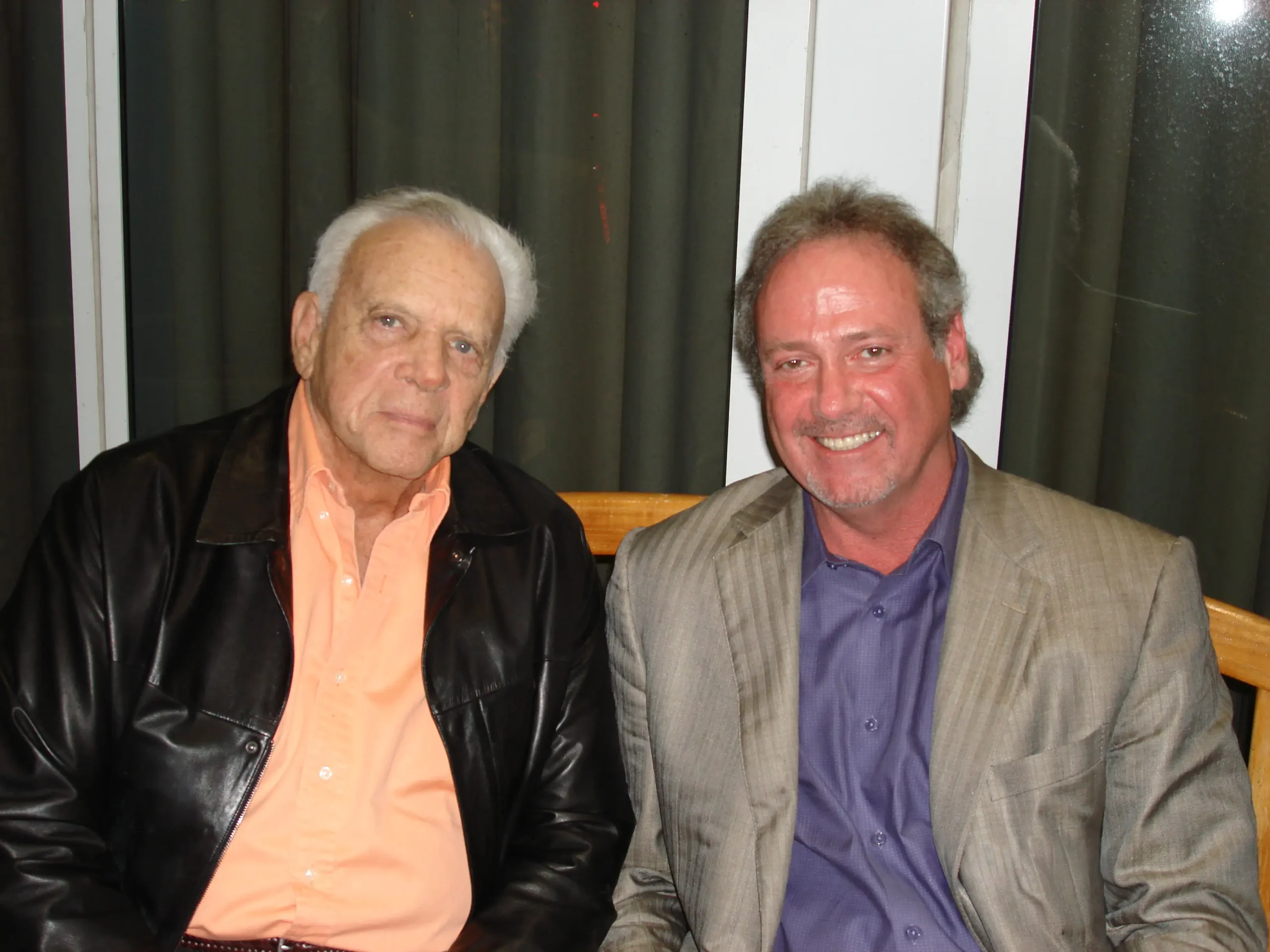
Dr. Ralph Millard & Dr. Paul S. Howard
Medical Disclaimer – Faceliftology®
The information provided on Faceliftology® is intended for general educational and informational purposes only and reflects general medical concepts related to facial aging and facelift procedures. It is not intended to constitute medical advice, diagnosis, or treatment recommendations, nor does it establish a physician–patient relationship.
Faceliftology® is an independent educational platform. Any medical or surgical information presented, including content that is reviewed or contributed to by a physician, is provided in a general context and does not represent individualized medical guidance.
Facelift surgery and related facial procedures involve highly individualized decision-making based on a patient’s anatomy, medical history, surgical technique, and overall health status. Outcomes, recovery timelines, and healing responses vary significantly between individuals and cannot be predicted or guaranteed.
Discussion of surgical techniques, adjunctive therapies, recovery strategies, nutritional considerations, or postoperative care reflects general principles described in clinical practice and medical literature. Such information does not imply that any specific approach is appropriate, necessary, or effective for a particular patient.
Users of this website should not rely on any content as a substitute for consultation with a qualified healthcare provider. All medical decisions, including whether to undergo surgery or pursue any aspect of preoperative or postoperative care, should be made in direct consultation with a board-certified plastic surgeon or other appropriately trained medical professional.
By using this website, you acknowledge that any reliance on the information provided is at your own discretion and risk.
Faceliftology® does not endorse or promote any specific treatment, provider, product, or technique unless explicitly stated. Inclusion of information does not imply superiority over other medically accepted approaches.
In the event of a medical concern, complication, or unexpected symptom, individuals should seek prompt evaluation by their surgeon or a qualified healthcare provider.
Content on this website may not reflect the most current medical developments and should not be interpreted as comprehensive or definitive medical guidance.