
Types of Facelift:
A Patient’s Guide to Choosing the Right Approach
Facelift surgery is not a single procedure, but a spectrum of techniques that vary in depth, anatomical impact, and long-term outcomes.
Understanding these differences is essential for patients seeking natural, durable facial rejuvenation.
This guide introduces the primary facelift approaches—mini facelift, SMAS facelift, and deep plane facelift—through a clinical lens, while helping you understand how surgeons determine the most appropriate technique based on anatomy and stage of aging.
What Are the Main Types of Facelift Procedures?
Facelift procedures are generally categorized by the depth of tissue correction:
- Mini facelift – addresses early skin laxity with limited structural repositioning
- SMAS facelift – repositions deeper facial layers for more comprehensive correction
- Deep plane facelift – releases and repositions deeper tissues as a single unit
Rather than being defined by name alone, facelift techniques differ in how effectively they address the underlying causes of facial aging.
- Facelifts differ primarily in depth of dissection and tissue repositioning
- Deeper techniques typically provide more structural and longer-lasting correction
- The most appropriate facelift depends on anatomy, degree of aging, and patient goals
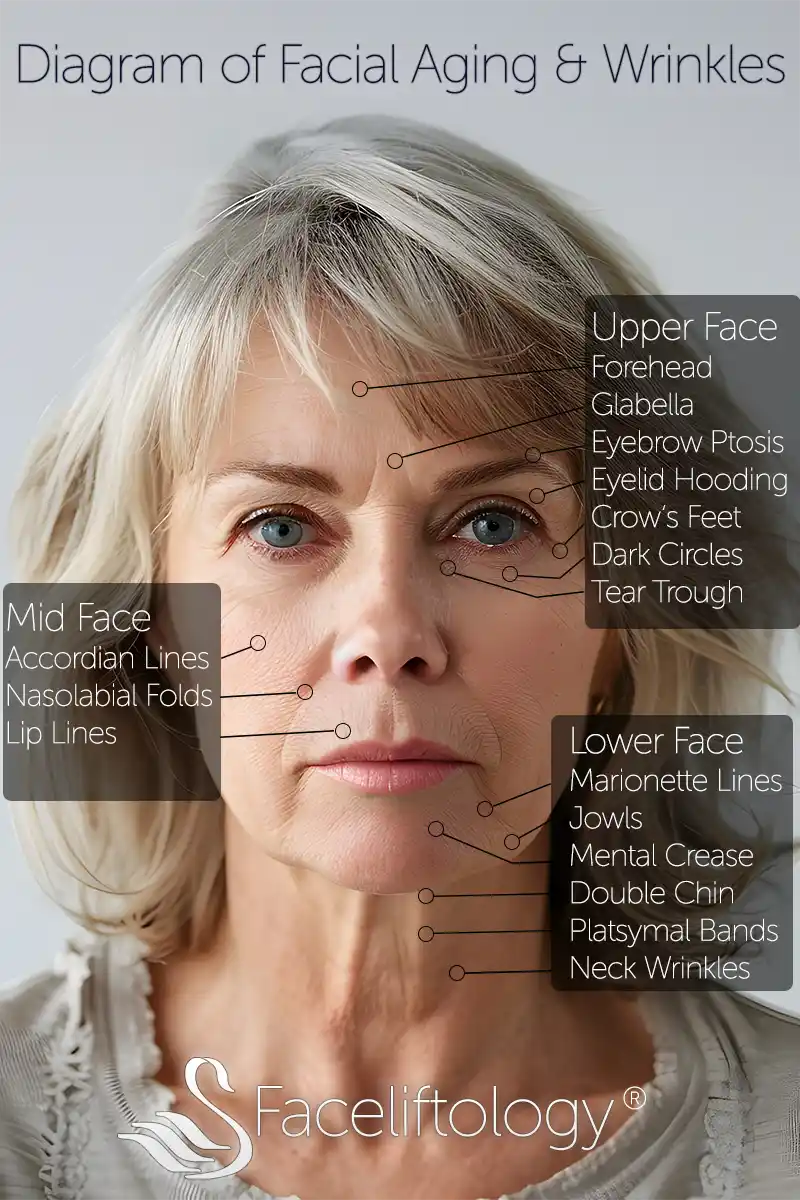
Understanding Facial Aging (Why Technique Matters)
Facial aging is a multi-layered process involving structural changes beneath the skin.
These include:
- Descent of the malar fat pad
- Weakening of the SMAS (superficial musculoaponeurotic system)
- Changes in retaining ligaments
- Redistribution or loss of facial volume
Because these changes occur at different anatomical levels, procedures that only tighten the skin often provide limited or short-lived improvement.
Modern facelift techniques are therefore defined by which layers are addressed and how those structures are repositioned.
What Is the Difference Between a Mini, SMAS, and Deep Plane Facelift?
The primary difference between facelift techniques is the depth of tissue manipulation:
- A mini facelift focuses on mild skin laxity with limited SMAS tightening
- A SMAS facelift repositions deeper structural layers to improve contour
- A deep plane facelift releases deeper ligaments and repositions tissues more comprehensively
In general, deeper techniques are used for more advanced facial aging.
Mini Facelift
This type of facial rejuvenation is typically for the patient that presents with facial aging in need of tightening of the skin and underling SMAS layer of muscle (superficial muscular aponeurotic system). The mini facelift usually involves shorter incisions than a regular facelift with surgical incisions placed in front of the ear and following around the earlobe. The typical goals of this facelift are to smoothen skin and tighten muscles to rejuvenate the signs of skin laxity and nasolabial folds.
Aging Focus:
- Mild skin laxity
- Early jowl formation
Technique Focus:
This approach involves shorter incisions and more limited manipulation of deeper structures, often with conservative SMAS tightening.
Best suited for:
Patients with early aging who are not yet candidates for more extensive structural repositioning
Traditional SMAS Facelift
This is the most typical of facelift procedures that includes tightening of the skin and SMAS layer of muscle. The regular facelift addresses sagging skin of the face including the jowls, cheeks, and nasolabial folds. The regular facelift addresses rejuvenation of the mid, lower face areas, and sometimes the neck area depending on the surgeon and cosmetic goals. The surgical incisions for a regular facelift usually begin in the hairline above the ear, follow along or in front of the ear, around the earlobe, behind the ear, and into the hairline (scalp) area.
Aging Focus:
- Moderate facial aging
- Deep facial wrinkles and defined jowl presence
Technique Focus:
Variations in technique may include plication, imbrication, or partial excision of the SMAS.
Best suited for:
Patients with moderate facial aging, including visible jowling and early neck laxity.
Deep Plane Facelift
This is the most current trending facelift procedure and the most misunderstood. Originally introduced in 1990, this type of facelift is often described as more aggressive than a traditional facelift procedure with the dissection being made below the SMAS of the midface into the deep plane area. The deep plane is the area that separates the superficial soft tissue from deeper structural anatomy. There are many emerging variations of the original “deep plane” facelift according to the surgeon’s techniques, training, and overall marketing verbiage. Some surgeons describe their version of this procedure as surgically tightening the platysma, which are the bands in the front of the neck. This would be a neck lift for most other plastic surgeons. However, the original deep plane facelift is defined by dissection of the plane beneath the SMAS.
Aging Focus:
- Advanced facial aging
- Deep facial wrinkles
Technique Focus:
This deeper anatomical approach repositioning of the skin and SMAS as a composite unit and a more direct correction of midface descent.
Best suited for:
Patients with moderate to advanced facial aging requiring more comprehensive structural correction.
Comparing the Different Types of Facelift Procedures
Because the different types of facelift procedures address specific areas of facial aging, patients often want to understand how these techniques compare. While the final recommendation should always come from a qualified plastic surgeon, the following overview illustrates the general goals of each procedure.
| Facelift Type | Primary Area Treated | Best For | Key Feature |
|---|---|---|---|
| Skin-Only Facelift | Lower face | Mild skin laxity | Tightens skin only |
| Mini Facelift | Jawline and lower face | Early signs of aging | Shorter incisions with limited SMAS tightening |
| Mid Facelift | Cheeks and midface | Sagging cheeks and deep nasolabial folds | Lifts malar fat pads |
| SMAS (Traditional) Facelift | Midface and jawline | Moderate facial aging | Tightens deeper SMAS layer |
| Deep Plane Facelift | Midface and jawline | Advanced facial aging | Repositions deeper facial structures |
| Full Facelift | Entire face and neck | Comprehensive facial rejuvenation | Often combined with neck lift or eyelid surgery |
What Does “Full Facelift” Mean?
A “full facelift” is not a specific surgical technique. It usually refers to a combination of procedures designed to address multiple areas of facial aging, such as the face, jawline, and neck.
This may include a SMAS or deep plane facelift along with additional treatments like a neck lift or fat grafting.
The term describes the scope of treatment, not a distinct type of facelift.
Types of Non-Surgical Facelift Procedures
Non-surgical facial rejuvenation options are often marketed as “facelifts,” but they differ fundamentally from surgical techniques in both scope and outcome. These treatments primarily address early or minor signs of aging, such as fine lines, minimal skin laxity, or volume loss, rather than the deeper structural changes seen with more advanced aging.
Most non-surgical approaches work by improving skin quality, adding volume, or creating subtle lifting effects. However, they do not reposition deeper anatomical structures such as the SMAS or underlying connective tissues.
As a result, outcomes are typically temporary and less comprehensive, often requiring ongoing maintenance to sustain results. While these treatments may be appropriate for select patients or used in combination with surgery, they are generally not a substitute for surgical facelift procedures when more significant tissue descent is present.
Thread Lift
This type of facial rejuvenation procedure is most performed under local anesthesia and can be an ideal option for the patient that presents with emerging facial aging. This procedure involves placement of temporary threads beneath the skin to lift and firm the skin. The threads are made of dissolvable suture material that typically last 1-3 years.
Laser Facelift
This type of facial rejuvenation procedure involves the use of medical laser technology to rejuvenate the surface of the skin. The cosmetic market is saturated with a myriad of medical lasers, some lasers are FDA approved as physician-only while others are approved to be operated by other medical and skincare professionals such as nurses and aestheticians. Medical rejuvenation lasers can resurface the skin leading it to appear tighter, while the heat from the light of the lasers can stimulate collagen growth that also rejuvenates the skin.
Liquid Facelift
This type of facial rejuvenation procedure usually involves multiple injections of a facial filler into areas of the face such as the nasolabial folds and cheeks to plump areas that have lost volume due to the aging process and fill-in lines and wrinkles. The facial dermal fillers could include temporary fillers made with hyaluronic acid or could be facial fat grafting injections using your own fat.
Is There a “Best” Type of Facelift?
There is no single “best” facelift technique. The most appropriate and most effective facelift is the one that is tailored to a patient’s specific cosmetic concerns, anatomical changes, and aesthetic goals.
Rather than focusing on procedure names, surgeons evaluate:
- Which anatomical layers are contributing to aging
- The degree of skin laxity and tissue descent
- The areas of the face and neck involved
- The patient’s desired outcome and longevity of results
A well-matched procedure should address the underlying structural changes while producing balanced, natural-looking results.
More advanced techniques are not always necessary, and less invasive approaches may be insufficient when deeper anatomical correction is required. The goal is not to choose the most aggressive option, but the one that most precisely aligns with the patient’s needs.
How to Choose the Right Facelift
Selecting the appropriate facelift technique requires careful evaluation of several factors:
- Degree of skin laxity
- Extent of midface descent
- Presence of neck aging
- Skin quality and elasticity
- Patient expectations and goals
No single procedure is universally “best.” The goal is to match the surgical approach to the underlying anatomical changes.
How Facelift Techniques Are Best Classified
Facelift techniques are most accurately understood by anatomical depth, tissue handling, and surgical purpose rather than marketing terminology alone.
| Technique Category | Primary Anatomical Focus | Typical Clinical Use | Common Marketing Names | What It Usually Means in Practice |
|---|---|---|---|---|
| Skin-Focused / Superficial Lift | Skin and superficial soft tissue | Rarely emphasized today as a standalone long-term solution; may be discussed in limited correction cases | Skin-only lift, limited lift | Surface tightening without meaningful repositioning of deeper structural layers |
| Mini Facelift / Limited Facelift | Skin plus limited SMAS tightening | Early aging, mild jowling, mild skin laxity | Mini facelift, short-scar facelift, weekend facelift, ponytail lift (in some cases) | A more limited lift designed for patients who do not yet require broader structural correction |
| SMAS-Based Facelift | Direct manipulation of the SMAS layer | Moderate facial aging, visible jowling, early to moderate neck laxity | Traditional facelift, SMAS lift, lower facelift, standard facelift | A structural facelift that improves facial contour by repositioning deeper support tissues rather than relying only on skin redraping |
| Deep Plane Facelift | Dissection beneath the SMAS with release of retaining ligaments | Moderate to advanced aging, midface descent, more integrated facial correction | Deep plane lift, composite-style lift, advanced facelift | A deeper structural approach that mobilizes facial tissues more comprehensively as a composite unit |
| Non-Surgical Facial Rejuvenation | Skin surface, temporary volume restoration, or superficial lifting effect | Marginal or early aging, maintenance, or adjunctive treatment | Thread lift, liquid facelift, laser facelift, scarless facelift | These treatments may improve appearance temporarily, but they do not reproduce the deeper structural repositioning of surgical facelift procedures |
Key point: The most meaningful way to evaluate a facelift is not by its name, but by which anatomical layers are being addressed and how those tissues are repositioned.
Emerging and Branded Facelift Techniques: What Patients Should Know
In recent years, a number of branded or technique-specific facelift variations have been introduced, often marketed under proprietary names.
Examples may include:
- The Ponytail Facelift
- Endoscopic facelift techniques
- Other surgeon-branded approaches
While these terms can be helpful in describing specific surgical styles, they are not standardized procedures in the same way as established techniques such as SMAS or deep plane facelifts.
In most cases, these approaches are variations of existing surgical principles and can typically be categorized based on:
- The depth of dissection
- Whether the SMAS is manipulated
- The extent of ligament release
For this reason, it is more important to understand what anatomical layers are being addressed rather than relying solely on procedure names.
Are New Facelift Techniques Like the Ponytail Facelift Different from Traditional Facelifts?
Many newer or branded facelift techniques are variations of established surgical approaches rather than entirely new procedures.
They are typically based on:
- Mini facelift techniques
- SMAS-based approaches
- Deep plane concepts
The key difference lies in how the procedure is performed and marketed, not necessarily in fundamentally new anatomy or surgical planes.
Patients should focus on what anatomical structures are being repositioned, rather than the name of the procedure.
References
- Hamra ST. Composite Rhytidectomy. Plast Reconstr Surg. 1992.
- Baker DC. Lateral SMASectomy. Clin Plast Surg. 1997.
- Rohrich RJ, et al. Facial Aging and Rejuvenation. Plast Reconstr Surg. 2013.
- Mendelson BC. Extended SMAS Dissection. Clin Plast Surg.
Medical Disclaimer – Faceliftology®
The information provided on Faceliftology® is intended for general educational and informational purposes only. It is not intended to constitute medical advice, diagnosis, treatment recommendations, or to establish a physician–patient relationship.
Facelift surgery and other cosmetic facial procedures involve individualized medical decision-making based on a patient’s anatomy, medical history, surgical plan, and overall health status. Recovery experiences, healing timelines, and outcomes vary between individuals and cannot be predicted or guaranteed.
Any discussion of surgical techniques, adjunctive therapies, nutritional support, lifestyle considerations, or recovery strategies reflects general principles described in the medical literature and does not imply that such measures are appropriate, necessary, or effective for every patient or procedure.
Patients should always consult directly with a board-certified plastic surgeon or other qualified healthcare professional regarding preoperative preparation, postoperative care, medications, supplements, adjunctive therapies, and activity restrictions. Only the operating surgeon or treating physician can provide recommendations specific to an individual patient’s care.
Faceliftology® does not endorse or promote any specific treatment, therapy, product, or recovery protocol unless explicitly stated, and inclusion of information does not imply superiority over other medically accepted approaches.
In the event of a medical concern, complication, or unexpected symptom following surgery, patients should seek immediate evaluation by their surgeon or an appropriate medical professional.
The content on this website should not be relied upon as a substitute for professional medical judgment, diagnosis, or treatment.