
What Type of Anesthesia Is Used for Facelift Surgery?
Facelift surgery may be performed using local anesthesia, intravenous (IV) sedation, or general anesthesia, depending on the complexity of the procedure and the surgeon’s preferred surgical environment. Many modern facelift procedures are performed using local anesthesia combined with IV sedation, which allows patients to remain comfortable while avoiding the deeper physiologic effects of general anesthesia. In some cases, surgeons may also perform facelift surgery using local anesthesia alone, particularly in office-based surgical settings.
Why Anesthesia Is Required for Facelift Surgery
Facelift surgery involves delicate surgical steps that require both precision and patient comfort. During the procedure, the surgeon carefully elevates facial skin, repositions deeper supporting structures such as the superficial musculoaponeurotic system (SMAS), removes excess skin, and closes incisions with meticulous technique. These steps require a stable surgical environment and patient immobility.
Anesthesia plays a critical role in making facelift surgery both safe and comfortable. It allows the surgical team to perform the procedure without pain while maintaining ideal operating conditions.
During facelift surgery, anesthesia serves several important purposes:
- Eliminating pain
- Maintaining patient comfort
- Preventing movement during delicate surgical maneuvers
- Reducing anxiety and physiologic stress
- Allowing the surgeon to operate with precision and efficiency
The type of anesthesia used during a facelift can vary depending on several factors, including:
- The extent of the facelift procedure
- Whether additional procedures are performed (such as a neck lift, eyelid surgery, or fat grafting)
- The patient’s overall health and medical history
- Surgeon and anesthesia provider preference
- The surgical facility where the procedure is performed
These factors are typically discussed during the preoperative consultation when the surgeon develops an individualized surgical and anesthesia plan.
Types of Anesthesia Used in Facelift Surgery
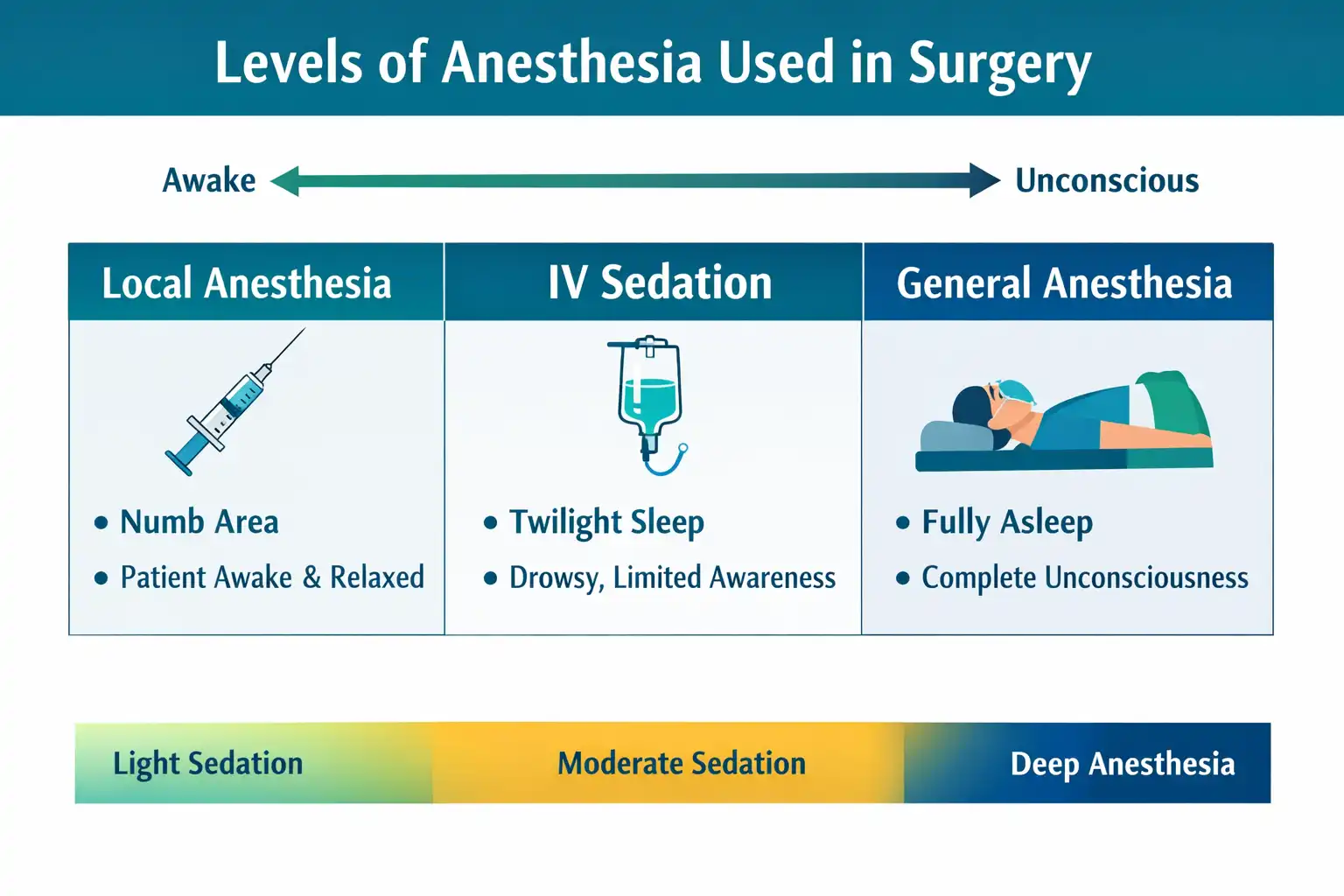
Local Anesthesia with Oral Sedation
Local anesthesia with oral sedation represents one of the least invasive anesthesia options used in facial plastic surgery. In this approach, patients receive a mild sedative medication prior to surgery while the surgical areas are numbed using local anesthetic injections.
The patient remains awake but relaxed, and the surgical area becomes completely insensitive to pain.
How It Works
The surgeon injects local anesthetic agents, typically lidocaine combined with epinephrine, into the surgical field. These medications block nerve signals that transmit pain while also reducing bleeding through localized vasoconstriction.
Oral sedatives such as benzodiazepines may be administered beforehand to reduce anxiety and promote relaxation.
Advantages
Local anesthesia with oral sedation offers several benefits:
- Reduced anesthesia risk compared with deeper sedation
- Faster postoperative recovery
- Less nausea after surgery
- Lower cost compared with operating room anesthesia
Limitations
When administered properly, local anesthesia can provide excellent pain control throughout the procedure. Because the anesthetic is delivered directly into the tissues being operated on, patients typically experience minimal discomfort while the surgeon performs the operation.
The primary limitation of local anesthesia is not necessarily the effectiveness of the anesthetic itself, but rather the time constraints and practical considerations associated with longer surgical procedures. Local anesthetic medications have a finite duration of action, and prolonged operations may require additional injections to maintain adequate numbness.
For this reason, performing facelift surgery under local anesthesia often requires patience and careful pacing by the surgeon. Surgeons who are experienced with this approach typically structure the procedure in a way that maintains patient comfort while allowing adequate time for meticulous surgical technique.
Another factor influencing anesthesia choice is the surgeon’s comfort zone and operative environment. In hospital or ambulatory surgery center settings where general anesthesia is commonly used, procedures may be scheduled within defined operating room time blocks. These scheduling structures can influence anesthesia decisions for logistical reasons.
By contrast, when facelift surgery is performed in an office-based surgical setting, surgeons may have greater control over the operative environment. This flexibility can allow procedures to proceed at a pace that prioritizes patient comfort and surgical precision without the same external time constraints.
For appropriately selected patients and when performed by experienced surgeons, facelift surgery under local anesthesia can be a safe and effective approach that avoids the deeper levels of sedation required with other anesthesia techniques.
Local Anesthesia with Intravenous (IV) Sedation
Intravenous sedation, often referred to as “twilight anesthesia,” is one of the most commonly used anesthesia techniques for facelift surgery. In this approach, sedative medications are delivered through an IV line, allowing the anesthesia provider to carefully control the level of sedation throughout the procedure.
Patients remain breathing independently but are typically deeply relaxed and often have little memory of the surgery.
How It Works
Medications such as propofol, midazolam, or fentanyl are administered intravenously to create a controlled sedative state. Local anesthetic injections are still used in the surgical area to block pain signals.
Because IV sedation can be adjusted continuously, anesthesia providers can maintain an ideal balance between patient comfort and physiological stability.
Advantages
This anesthesia technique provides several benefits for facelift procedures:
- High level of patient comfort
- Reduced awareness of the procedure
- Faster recovery compared with general anesthesia
- Lower rates of postoperative nausea
Many facial plastic surgeons prefer IV sedation because it allows excellent surgical control while avoiding the deeper physiological effects of general anesthesia.
Limitations
Although IV sedation is generally very safe, it still requires careful monitoring by a trained anesthesia professional. Patients must also undergo standard preoperative evaluation to ensure they are appropriate candidates.
General Anesthesia
General anesthesia places the patient into a fully unconscious state during surgery. Breathing is supported through airway devices while anesthetic medications maintain complete sedation throughout the procedure.
This approach is typically used in hospital settings or accredited surgical centers.
How It Works
General anesthesia is administered through a combination of intravenous medications and inhaled anesthetic gases. Once the patient is unconscious, the anesthesia team monitors vital signs including heart rate, blood pressure, oxygen levels, and breathing throughout the procedure.
Because the patient is completely asleep, they have no awareness of the surgery.
Advantages
General anesthesia may be recommended when:
- The facelift procedure is extensive
- Multiple facial procedures are performed simultaneously
- Surgery is expected to last several hours
- Patient anxiety is particularly high
It also allows the surgical team complete control over the operative environment.
Limitations
Compared with lighter anesthesia techniques, general anesthesia carries a somewhat higher risk of certain postoperative side effects. While serious complications remain rare in healthy patients undergoing elective cosmetic procedures, the deeper level of physiologic suppression associated with general anesthesia can increase the likelihood of some temporary postoperative symptoms.
Common side effects may include:
- Postoperative nausea and vomiting
- Sore throat caused by airway devices used during anesthesia
- Grogginess or fatigue during early recovery
- Longer observation time in the recovery area
In addition to these temporary effects, general anesthesia is also associated with a small risk of circulatory and respiratory complications, particularly during longer surgical procedures. One of the concerns discussed in surgical safety literature is the potential for deep vein thrombosis (DVT), a condition in which blood clots form in the deep veins of the legs. In rare cases, these clots can travel to the lungs and cause a pulmonary embolism (PE).
Several factors influence this risk, including:
- Length of the surgical procedure
- Patient age and medical history
- Reduced mobility during and immediately after surgery
- Smoking or nicotine use
- Certain underlying clotting disorders
Plastic surgeons and anesthesia providers take multiple precautions to reduce these risks. Preventive measures may include careful patient screening, minimizing operative time, early postoperative ambulation, and in some cases the use of compression devices during surgery to support healthy blood circulation.
For these reasons, many surgeons reserve general anesthesia for more extensive procedures or when multiple surgeries are performed simultaneously, while lighter anesthesia techniques such as local anesthesia with IV sedation may be used for many standard facelift procedures.
Choosing the Right Anesthesia for Facelift Surgery
The most appropriate anesthesia approach is determined during the preoperative consultation. Surgeons consider several factors when making this recommendation:
- Surgical complexity
- Patient medical history
- Expected operative time
- Patient comfort preferences
- Surgical facility capabilities
For many modern facelift procedures, local anesthesia with IV sedation provides an ideal balance of safety, comfort, and recovery speed. However, each patient’s situation is unique.
A thorough consultation with a qualified plastic surgeon helps determine which anesthesia approach is most appropriate for achieving safe and successful surgical outcomes.
Safety of Anesthesia in Facelift Surgery
Modern anesthesia techniques used in plastic surgery are considered extremely safe when performed by qualified anesthesia providers in accredited surgical facilities.
Large clinical studies examining cosmetic surgery outcomes have consistently demonstrated low complication rates associated with anesthesia in facial plastic surgery procedures.
A frequently cited study published in Aesthetic Surgery Journal evaluated more than 129,000 cosmetic surgery patients and found that serious anesthesia-related complications were rare when procedures were performed in accredited outpatient surgical facilities.
Several factors contribute to the safety of anesthesia during facelift surgery:
- Careful patient screening before surgery
- Use of modern anesthetic medications with predictable effects
- Continuous monitoring of vital signs during the procedure
- Experienced anesthesia providers trained in perioperative care
- Accredited surgical facilities that follow strict safety protocols
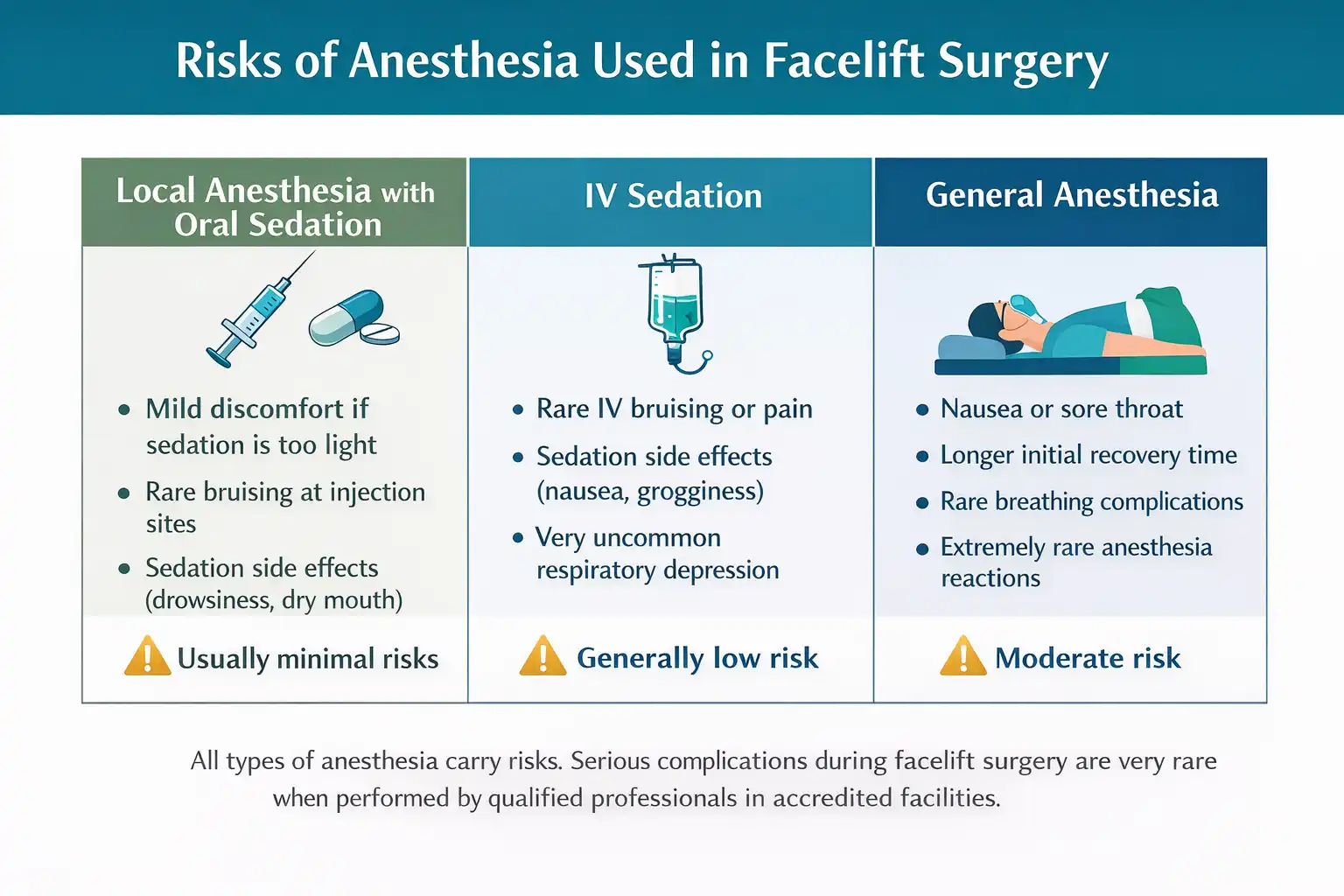
Because most facelift procedures are performed on otherwise healthy patients and typically last only a few hours, anesthesia risk is generally considered very low. However, thorough preoperative evaluation remains essential for identifying any medical conditions that may influence anesthesia planning.
Comparison of Anesthesia Options for Facelift Surgery
A comparison of the most commonly used anesthesia approaches can help patients better understand how these techniques differ.
| Anesthesia Type | Patient Awareness | Typical Use | Advantages | Considerations |
|---|---|---|---|---|
| Local Anesthesia with Oral Sedation | Awake but relaxed | Limited or mini facelifts | Quick recovery, minimal systemic effects | May be less comfortable for longer procedures |
| Local Anesthesia with IV Sedation | Deep relaxation, little memory of surgery | Most modern facelift procedures | Excellent comfort, faster recovery than general anesthesia | Requires anesthesia provider monitoring |
| General Anesthesia | Fully unconscious | Extensive facelifts or combined procedures | Complete patient immobility, ideal for longer surgery | Slightly longer recovery and higher postoperative nausea risk |
This comparison highlights why many facial plastic surgeons prefer IV sedation combined with local anesthesia for standard facelift procedures. It offers a balance of patient comfort, surgical control, and efficient recovery.
How Anesthesia Affects Facelift Recovery
The type of anesthesia used during facelift surgery can influence several aspects of postoperative recovery, including how quickly patients regain alertness, how they feel immediately after surgery, and how soon they can return home.
While the surgical technique itself has the greatest impact on overall healing, anesthesia affects the early recovery phase during the first several hours after surgery.
Patients who undergo facelift surgery with local anesthesia and intravenous (IV) sedation often experience a smoother immediate recovery compared with those receiving general anesthesia. Because the sedative medications used in IV sedation typically wear off more quickly, patients may feel more alert shortly after the procedure.
Common differences in early recovery include:
Local anesthesia with IV sedation
- Faster awakening after surgery
- Lower rates of postoperative nausea
- Reduced grogginess
- Earlier discharge from the surgical facility
General anesthesia
- Slightly longer recovery time in the postoperative care area
- Greater likelihood of temporary nausea or dizziness
- Possible throat irritation from airway devices used during anesthesia
Despite these early differences, most patients recover comfortably regardless of the anesthesia type used. Surgeons and anesthesia providers carefully select medications to minimize side effects and ensure a safe recovery.
It is important to note that anesthesia does not significantly change the overall healing timeline of facelift surgery, which is primarily determined by tissue swelling, bruising, and the body’s natural healing process.
Who Administers Anesthesia During Facelift Surgery?
Anesthesia used during facelift surgery is administered and monitored by trained medical professionals who specialize in anesthesia care. These providers are responsible for maintaining patient comfort, monitoring vital functions, and ensuring safety throughout the surgical procedure.
Depending on the surgical setting and the type of anesthesia used, anesthesia may be provided by one of several qualified professionals.
Board-Certified Anesthesiologists
A board-certified anesthesiologist is a physician who has completed medical school followed by specialized residency training in anesthesiology. These physicians are experts in administering anesthesia, managing airway and breathing, and responding to changes in a patient’s physiological condition during surgery.
Anesthesiologists are commonly involved in procedures performed under general anesthesia or deeper levels of intravenous sedation. They carefully monitor critical vital signs throughout the procedure, including heart rate, blood pressure, oxygen levels, breathing, and cardiac rhythm.
Certified Registered Nurse Anesthetists (CRNAs)
Certified Registered Nurse Anesthetists (CRNAs) are advanced practice nurses who have completed extensive training in anesthesia care. After becoming registered nurses, CRNAs undergo additional graduate-level education and clinical training specifically focused on anesthesiology.
CRNAs frequently administer anesthesia in surgical centers and hospital settings and are qualified to provide many types of anesthesia used in cosmetic surgery, including intravenous sedation and general anesthesia. In many surgical facilities, CRNAs work in collaboration with anesthesiologists or surgeons as part of the anesthesia care team.
Surgeon-Administered Local Anesthesia
For certain facelift procedures performed under lighter sedation, the plastic surgeon may administer the local anesthetic medications that numb the surgical area. These medications block pain signals in the tissues being treated while the anesthesia provider manages sedation and monitoring.
Local anesthetics such as lidocaine combined with epinephrine are commonly used to numb facial tissues and reduce bleeding during surgery. When properly administered, these medications provide excellent pain control throughout the procedure.
The Importance of Accredited Surgical Facilities
Regardless of who administers anesthesia, facelift surgery should always be performed in an accredited surgical facility that follows strict safety protocols. Accreditation organizations establish standards for equipment, monitoring, emergency preparedness, and anesthesia safety.
Common accreditation bodies for plastic surgery facilities include:
- American Association for Accreditation of Ambulatory Surgery Facilities (AAAASF)
- Accreditation Association for Ambulatory Health Care (AAAHC)
- The Joint Commission
These organizations help ensure that surgical facilities maintain high standards for patient safety and quality of care.
By working with qualified anesthesia professionals in accredited facilities, plastic surgeons can safely perform facelift surgery while maintaining patient comfort and carefully monitoring physiological stability throughout the procedure.
Special Anesthesia Considerations for Nicotine and Smoking
Nicotine use is one of the most important medical factors surgeons evaluate before facelift surgery. Smoking, vaping, nicotine patches, and other nicotine-containing products can affect both anesthesia safety and surgical healing.
Nicotine causes vasoconstriction, meaning it narrows blood vessels and reduces blood flow to tissues. Because facelift surgery relies on delicate skin flaps that must maintain healthy circulation, reduced blood supply significantly increases the risk of complications.
Nicotine can also influence anesthesia by affecting cardiovascular function. Smoking increases heart rate, blood pressure variability, and airway reactivity, which can complicate anesthesia management during surgery.
For these reasons, most plastic surgeons require patients to stop all nicotine use several weeks before and after facelift surgery. This cessation period allows the body’s vascular system to recover and improves tissue oxygenation.
Patients are often advised to discontinue nicotine use 4-6 weeks before surgery. In many practices, surgeons may perform nicotine testing prior to surgery to confirm that patients have fully discontinued use.
By eliminating nicotine exposure during the surgical period, patients significantly reduce the risk of complications and improve the likelihood of optimal facelift results.
Surgeon Perspective: Why Many Facelifts Are Performed Without General Anesthesia
Many modern facelift procedures are now performed using local anesthesia combined with IV sedation rather than full general anesthesia. This shift reflects both advances in anesthesia medications and improvements in surgical technique.
When deeper facial structures are carefully infiltrated with local anesthetic solutions, surgeons can maintain excellent pain control throughout the procedure while minimizing systemic anesthesia exposure.
Patients undergoing facelift surgery with IV sedation often experience:
- Reduced postoperative nausea
- Faster recovery after surgery
- Earlier discharge from the surgical facility
- Less grogginess following the procedure
For appropriately selected patients, this approach can provide an excellent balance of safety and comfort. However, general anesthesia remains an important option for longer procedures or when multiple surgeries are performed simultaneously.
Ultimately, anesthesia decisions are individualized based on the patient’s health profile, surgical plan, and surgeon preference.
Anesthesia plays a critical role in the success of facelift surgery. Advances in anesthesia techniques have made modern facelift procedures safer and more comfortable than ever before.
By understanding the different anesthesia options available including local anesthesia, IV sedation, and general anesthesia, patients can participate more confidently in surgical planning and approach their procedure with greater peace of mind.
When performed by experienced surgeons and anesthesia providers in accredited surgical facilities, facelift surgery can be conducted safely using anesthesia techniques carefully tailored to each patient’s needs.
Medical Review: The information presented in this article reflects commonly accepted anesthesia practices used in modern facelift surgery and is intended for educational purposes. Specific anesthesia recommendations should always be determined through consultation with a qualified plastic surgeon and anesthesia provider.
References
- American Society of Plastic Surgeons. Practice advisory on anesthesia for cosmetic surgery. 2020. Accessed March 2026.
- Gordon R. Keyes, Robert Singer, Robert E. Iverson, et al. Mortality in outpatient surgery. Aesthetic Surgery Journal. 2004;24(5):399–403.
- Lars T. Sørensen. Wound healing and infection in surgery: the clinical impact of smoking and smoking cessation. The Lancet. 2012;379(9821):123–141. doi:10.1016/S0140-6736(11)61706-0.
- American Association for Accreditation of Ambulatory Surgery Facilities. Patient safety in office-based surgery. Accessed March 2026.
- American Society of Anesthesiologists. Guidelines for office-based anesthesia. Updated 2019.