
Supporting Your Healing Journey After a Facelift
Facelift surgery involves precise manipulation of facial soft tissues, skin, and deeper structural layers. While surgical technique is a critical determinant of outcome, the postoperative healing process plays a substantial role in recovery progression, complication risk and scar maturation.
Facelift recovery is a biologically complex process influenced by vascular supply, oxygen delivery, inflammatory response, nutritional status and patient-specific health factors. This article provides general educational information regarding commonly discussed strategies that may support healing when used appropriately and under the guidance of a qualified surgical team.
Following surgery, your body begins a carefully coordinated healing process designed to restore and strengthen the treated tissues. This natural response includes:
- Controlled inflammation that initiates repair
- Angiogenesis, or the formation of new blood vessels, to improve circulation
- Fibroblast activity and collagen production to rebuild tissue structure
- Gradual remodeling as swelling subsides and tissues mature
When these processes are well supported, through good circulation, adequate oxygenation and proper nutrition, healing tends to progress more smoothly. Factors that interfere with these systems may slow recovery or increase the risk of complications. It is also important to recognize that healing timelines are individualized, and recovery experiences can vary from patient to patient.
Facelift recovery is not simply a waiting period, it is an active phase of healing in which the body works to repair tissue, reduce swelling, and restore normal circulation. While surgical technique plays a critical role in outcome, the way the body heals afterward is influenced by a combination of biological, environmental, and lifestyle factors.
Certain measures may help support the body’s natural healing processes during recovery. These include optimizing nutrition and hydration, minimizing inflammation, maintaining healthy circulation and oxygen delivery, reducing stress and carefully following surgeon-directed instructions. In some cases, additional supportive therapies may be considered on an individualized basis.
It is important to understand that no single strategy guarantees a faster or easier recovery, and healing timelines vary between patients. However, creating the right conditions for healing can promote a smoother, more predictable recovery experience and support long-term results when guided by a board-certified plastic surgeon.
Adjunctive Therapies That May Support Facelift Healing
Platelet-Rich Plasma (PRP)
Platelet-rich plasma (PRP) is an autologous biologic prepared from a patient’s own blood that contains a concentrated suspension of platelets and associated growth factors involved in normal tissue repair processes.
In select cases, PRP may be used by some plastic surgeons as an adjunctive measure during or after facial surgery with the intent of supporting soft-tissue healing. Published literature suggests PRP may play a role in modulating inflammation and influencing collagen organization; however, clinical responses vary, and PRP is not a standard or required component of facelift recovery.
The decision to use PRP should be individualized and made at the discretion of the operating board-certified plastic surgeon based on patient-specific factors.
Hyperbaric Oxygen Therapy (HBOT)
Hyperbaric oxygen therapy (HBOT) involves intermittent exposure to 100% oxygen at increased atmospheric pressure, resulting in elevated tissue oxygen levels.
HBOT has recognized applications in wound care and ischemic tissue management and may be utilized selectively in postoperative patients at the discretion of a physician. Evidence suggests HBOT can support angiogenesis and fibroblast activity in certain clinical contexts.
HBOT is not universally indicated following facelift surgery and should only be considered when medically appropriate.
Intravenous (IV) Vitamin Therapy
Intravenous (IV) vitamin therapy, including intravenous vitamin C, has been utilized in various medical and surgical settings as a means of achieving plasma vitamin concentrations that are not attainable through oral supplementation alone.
In the postoperative period, IV vitamin therapy may be employed as a supportive measure with the intent of addressing increased metabolic demands associated with tissue repair, supporting normal collagen synthesis, and assisting the body’s response to surgical inflammation and oxidative stress. Some clinicians incorporate IV vitamin therapy during recovery as part of a broader, individualized supportive care approach.
The use of IV vitamin therapy following facelift surgery remains adjunctive, non-standardized, and patient-specific. Clinical application varies based on individual health status, surgical complexity, and physician judgment, and it is not considered a required component of facelift recovery. Decisions regarding IV vitamin therapy should be made in consultation with the operating board-certified plastic surgeon or treating physician.
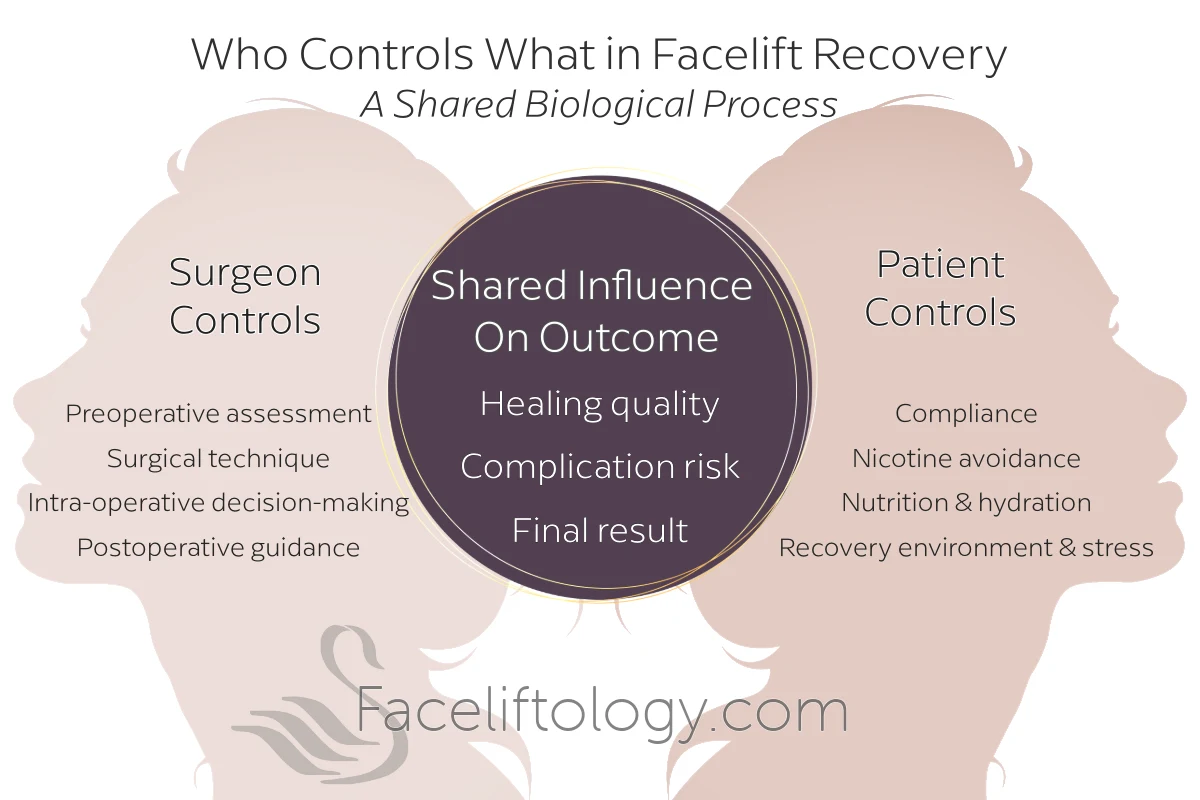
Patient-Related Factors That Influence Facelift Healing
Nutritional and Vitamin Support
Adequate nutrition is essential for normal wound healing. Deficiencies in key micronutrients have been associated with impaired collagen synthesis and delayed tissue repair.
Commonly discussed nutrients include:
- Vitamin C (collagen synthesis)
- Zinc (immune and epithelial support)
- B-complex vitamins (cellular metabolism)
Vitamin supplementation should only be undertaken according to surgeon or physician guidance, as excessive or inappropriate supplementation may interfere with medications or healing processes.
Nicotine Exposure and Surgical Healing
Nicotine exposure, regardless of delivery method, has been consistently associated with adverse surgical outcomes.
Documented effects include:
- Vasoconstriction
- Reduced tissue oxygenation
- Increased risk of wound complications
- Delayed healing and skin compromise
For this reason, most surgeons require complete cessation of all nicotine products, including vaping and nicotine replacement therapies, before and after facelift surgery.
Dietary Sodium and Postoperative Swelling
Sodium intake plays a role in fluid regulation and can influence the degree and duration of postoperative swelling. Diets high in sodium may contribute to increased fluid retention and prolonged edema following facial surgery.
For this reason, patients are often advised to follow a low-sodium diet during the recovery period. Processed foods, packaged meals, and canned soups are common sources of hidden sodium and are frequently discouraged during early healing.
Hydration and Recovery Support
Adequate hydration supports circulatory function, lymphatic drainage, and metabolic processes involved in tissue repair. Dehydration has been associated with delayed wound healing in medical literature.
Hydration recommendations should be individualized, particularly in patients with medical conditions affecting fluid balance.
Recovery Environment and Stress Considerations
Psychological and physiologic stress can influence wound healing through neuroendocrine pathways. Elevated stress hormones have been associated with impaired immune response and delayed tissue repair during the postoperative period.
Patients are commonly encouraged to plan their recovery in a low-stress, smoke-free environment, which includes avoiding exposure to second-hand smoke. Even indirect smoke exposure has been shown to affect oxygen delivery and vascular function, factors that are important in normal wound healing. Adequate rest and sleep in a clean, supportive environment are considered important components of postoperative recovery.
Importance of Following Surgeon-Specific Instructions
Preoperative and postoperative instructions provided by the operating surgeon are specifically tailored to the procedure performed and the individual patient’s medical and surgical profile. These instructions are designed to support safe healing and reduce the risk of complications.
Guidance may include, but is not limited to:
- Medication use
- Activity restrictions
- Head positioning
- Wound care protocols
Patient compliance with these instructions is a critical factor in recovery. Strict adherence supports predictable healing, while deviations may increase the risk of delayed recovery or complications. General educational information is not a substitute for individualized medical advice provided by the treating surgeon.
Facelift recovery is influenced by multiple patient-specific and biological factors. While certain supportive measures may aid healing, no strategy guarantees recovery speed or outcome, and all adjunctive therapies should be evaluated within the context of individualized surgical care.
Patients are encouraged to discuss all recovery strategies directly with their board-certified plastic surgeon.
Clinical References
Guo S, DiPietro LA. Factors Affecting Wound Healing. J Dent Res. 2010.
Marx RE. Platelet-rich plasma: evidence to support its use. J Oral Maxillofac Surg. 2004.
Everts PA et al. Platelet-rich plasma and platelet gel: a review. Platelets. 2006.
Thom SR. Hyperbaric oxygen therapy. J Intensive Care Med. 1989.
Kindwall EP, Whelan HT. Hyperbaric Medicine Practice. Best Publishing, 2016.
Pullar JM et al. The roles of vitamin C in skin health. Nutrients. 2017.
Padayatty SJ et al. Vitamin C pharmacokinetics: implications for oral and intravenous use. Ann Intern Med. 2004.
Sørensen LT. Wound healing and infection in surgery: the role of smoking. J Wound Care. 2012.
Guyton AC, Hall JE. Textbook of Medical Physiology. Elsevier.
Thomas DR. Hydration and wound healing. Adv Skin Wound Care. 2001.
Kiecolt-Glaser JK et al. Psychological stress and wound healing. Arch Gen Psychiatry. 1995.
Medical Disclaimer – Faceliftology®
The information provided on Faceliftology® is intended for general educational and informational purposes only. It is not intended to constitute medical advice, diagnosis, treatment recommendations, or to establish a physician–patient relationship.
Facelift surgery and other cosmetic facial procedures involve individualized medical decision-making based on a patient’s anatomy, medical history, surgical plan, and overall health status. Recovery experiences, healing timelines, and outcomes vary between individuals and cannot be predicted or guaranteed.
Any discussion of surgical techniques, adjunctive therapies, nutritional support, lifestyle considerations, or recovery strategies reflects general principles described in the medical literature and does not imply that such measures are appropriate, necessary, or effective for every patient or procedure.
Patients should always consult directly with a board-certified plastic surgeon or other qualified healthcare professional regarding preoperative preparation, postoperative care, medications, supplements, adjunctive therapies, and activity restrictions. Only the operating surgeon or treating physician can provide recommendations specific to an individual patient’s care.
Faceliftology® does not endorse or promote any specific treatment, therapy, product, or recovery protocol unless explicitly stated, and inclusion of information does not imply superiority over other medically accepted approaches.
In the event of a medical concern, complication, or unexpected symptom following surgery, patients should seek immediate evaluation by their surgeon or an appropriate medical professional.
The content on this website should not be relied upon as a substitute for professional medical judgment, diagnosis, or treatment.