
Understanding Facelift Drains: Purpose, Timeline, and What to Expect
Surgical drains are commonly used after many types of procedures to remove excess fluid that can accumulate during the early stages of healing.
In facial plastic surgery, particularly facelift and neck lift procedures, drains are sometimes placed temporarily to help reduce swelling, prevent fluid collections and support a smoother recovery.
For most facelift patients, drains typically remain in place for about one day to several days, although some surgeons may leave them in up to a week depending on drainage volume and surgical technique.
Understanding why drains are used and how long they stay in place can help patients feel more comfortable during the early stages of recovery.
What Do Surgical Drains Do?
Surgical drains remove fluid that naturally accumulates in tissue spaces after surgery.
During procedures such as a facelift, the skin is gently elevated and repositioned. This process creates a temporary space beneath the skin where blood and inflammatory fluid may collect in the first days after surgery.
Drains help:
- Remove excess fluid and blood
- Reduce swelling and bruising
- Lower the risk of fluid collections such as hematomas or seromas
- Support more predictable healing
Rather than causing swelling or discomfort, drains are typically preventing fluid buildup that would otherwise increase swelling and pressure in the tissues.
Types of Surgical Drains Used in Plastic Surgery
Different surgical procedures require different types of drains. The size and design of the drain often depend on the surgical area and the amount of fluid expected during recovery.
Jackson-Pratt (JP) Drains
Jackson-Pratt drains are widely used in many surgical procedures.
These drains consist of a flexible tube connected to a soft bulb reservoir that creates gentle suction.
JP drains are commonly used for procedures that produce more postoperative fluid, such as:
- Tummy tuck surgery
- Breast surgery
- Reconstructive procedures
Because these procedures involve larger surgical areas, the tubing used for JP drains is generally larger than the drains used in facial surgery.
TLS Drains (Common in Facelift Surgery)
Facelift surgery typically uses much smaller drains, often called TLS (Tender Leakage System) drains.
TLS drains are specifically designed for delicate facial procedures.
Key differences include:
- Much smaller diameter tubing
- Smaller drainage reservoir
- Designed for low fluid volumes typical in facial surgery
Because they are so small, many patients are surprised to learn that the portion of the drain under the skin is far smaller than they initially imagined.
These drains are commonly used for:
- Facelift procedures
- Neck lift surgery
- Some brow lift procedures
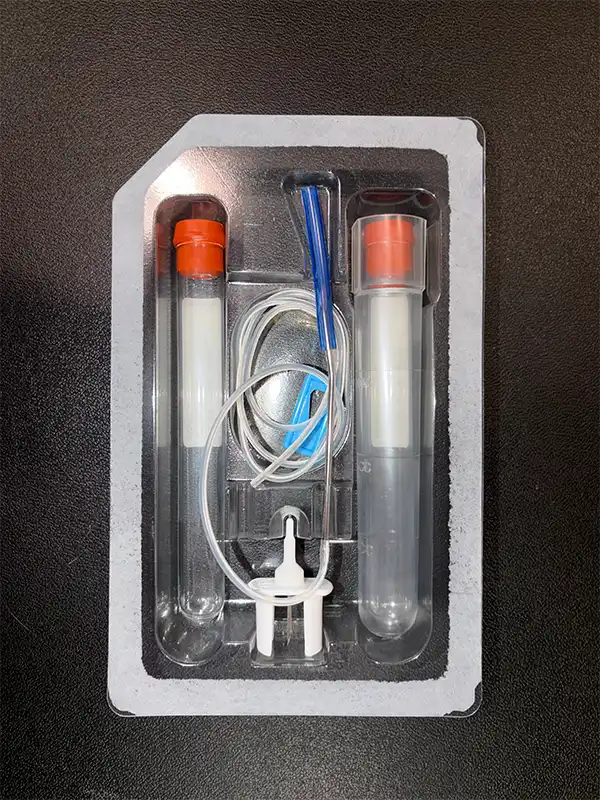
Image shows a common type of facelift drain, commonly called a TLS Drain.
Types of Surgical Drains Used in Plastic Surgery
Different surgical procedures use different types of drains depending on the amount of fluid expected after surgery. Larger procedures such as tummy tucks often use Jackson-Pratt drains, while smaller drains such as TLS drains are commonly used for facelift and neck lift procedures.
Jackson-Pratt (JP) Drain
- Commonly used for: tummy tuck, breast surgery, and larger body procedures.
- Tubing size: larger tubing designed for higher fluid output.
- Drainage reservoir: bulb suction system that collects greater fluid volume.
- Surgical area: larger surgical spaces where fluid accumulation is expected.
- Visibility: more noticeable due to the larger bulb.
TLS Drain (Common in Facelift Surgery)
- Commonly used for: facelift, neck lift, and some brow lift procedures.
- Tubing size: much smaller tubing designed for delicate facial tissues.
- Drainage reservoir: compact system designed for lower fluid volumes.
- Surgical area: smaller surgical spaces of the face and neck.
- Patient experience: often far smaller than patients expect.
How Long Do Drains Stay in After a Facelift?
For most facelift patients, drains are temporary and usually remain in place for a short period of time.
Typical timelines include:
- 24 hours in many cases
- 2–3 days for moderate drainage
- Up to 5–7 days in select situations
The exact timing depends on how much fluid is still being produced during recovery. Once the drainage decreases to a minimal level, the surgeon will typically remove the drain.
Because facelift drains are small and placed in a delicate area, they are rarely needed for extended periods.
Are Facelift Drains Painful?
Many patients worry that drains will be painful or uncomfortable.
Facelift drains are usually not a significant source of pain.
Two factors help minimize discomfort:
- The drains are very small, especially TLS drains used in facial surgery.
- The surgical area is often still partially numb, which reduces sensation in the early days after surgery.
Patients sometimes perceive the drain as much larger beneath the skin than it actually is. The tubing is quite small and designed to move fluid without creating pressure.
Most patients describe the sensation as more unusual than painful.
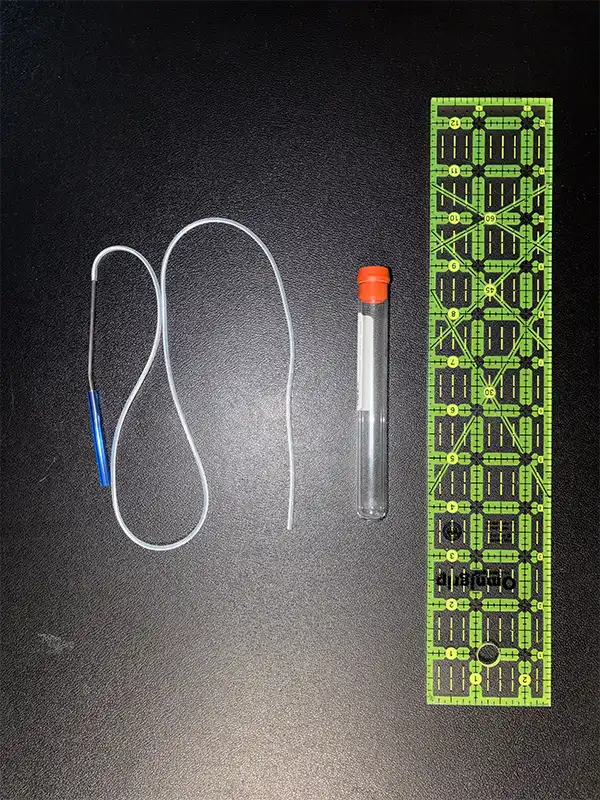
Image show the main components of the typical facelift drain. Approximately 3-5 inches of the tiny tubing is placed beneath the surface of the skin and attches to a collection tube. These collection tubes are usually secured within the post-operative compression dressing.
Does Removing Surgical Drains Hurt?
Drain removal is usually quick and well tolerated.
In many facelift patients, the skin and surrounding tissues are still numb when the drain is removed, which means the process is often painless.
Some patients describe a brief pulling or sliding sensation as the small tube beneath the skin is gently removed. The sensation may feel unusual but typically lasts only a few seconds.
Once removed, the small incision used for the drain generally closes on its own.
Typical Facelift Drain Timeline After Surgery
Most facelift drains are temporary and are usually removed within the first several days after surgery. The exact timing depends on how much fluid is still draining and the surgeon’s routine postoperative protocol.
Day 1 After Surgery
Many facelift patients still have their drains in place during the first postoperative day. At this stage, the drains help remove early blood and fluid that would otherwise contribute to swelling and bruising.
Days 1–3
This is a common timeframe for drain removal after facelift or neck lift surgery. Once output decreases to a low level, the surgeon may remove the drains during an early follow-up visit.
Days 3–7
Some surgeons prefer to leave drains in a little longer depending on drainage amount, the extent of surgery, or individual healing patterns. It is still uncommon for facelift drains to remain in place beyond about a week.
After Removal
A small amount of drainage from the tiny drain opening is normal after removal. Patients are usually advised to keep gauze or a light dressing over the site until the opening closes and drainage stops.
What Happens After Drains Are Removed?
After a drain is removed, the small opening where the tube exited the skin will be covered with gauze or a small dressing.
It is normal for a small amount of fluid to continue draining from this opening for a short period of time.
Patients can expect:
- Light drainage onto the gauze dressing
- The opening to close naturally over the next day or two
- Gradual reduction in fluid output
This drainage is expected and helps the body continue clearing residual fluid from the surgical area.
However, patients should contact their surgeon if they notice:
- Drainage with a foul odor
- Increasing redness or swelling
- Sudden changes in pain
These symptoms are uncommon but should be evaluated if they occur.
The Role of Drains in Facelift Recovery
Although drains may seem intimidating at first, they are a valuable tool that helps surgeons manage early postoperative healing.
By removing excess fluid, drains can:
- Reduce swelling and bruising
- Lower the risk of complications
- Support a smoother recovery
For most facelift patients, drains are only a temporary part of the facelift recovery process, typically lasting just a few days before they are safely removed.
Common Questions About Facelift Drains
How long do drains stay in after facelift surgery?
Most facelift drains remain in place for about 1 to 3 days after surgery, although some surgeons may leave them in up to a week depending on drainage volume and surgical technique. Drains are removed once fluid output decreases to a minimal level. Because facelift procedures typically produce less postoperative fluid than body procedures, the drains used in facial surgery are usually temporary.Do facelift drains hurt?
Facelift drains are usually not painful. The tubing used in facial procedures is very small, and the surgical area is often still partially numb during the early recovery period. Most patients describe the sensation as more unusual than painful, particularly when they first become aware of the drain or when it is removed.What happens after surgical drains are removed?
After a surgical drain is removed, the small opening where the tube exited the skin is typically covered with gauze or a small dressing. It is normal for a small amount of fluid to continue draining for a short time as the body finishes clearing remaining fluid from the surgical area. This drainage usually decreases quickly and the opening typically closes within a day or two. Patients should contact their surgeon if drainage develops a foul odor, significant redness, or increasing swelling, although this is uncommon.Medical Disclaimer – Faceliftology®
The information provided on Faceliftology® is intended for general educational and informational purposes only. It is not intended to constitute medical advice, diagnosis, treatment recommendations, or to establish a physician–patient relationship.
Facelift surgery and other cosmetic facial procedures involve individualized medical decision-making based on a patient’s anatomy, medical history, surgical plan, and overall health status. Recovery experiences, healing timelines, and outcomes vary between individuals and cannot be predicted or guaranteed.
Any discussion of surgical techniques, adjunctive therapies, nutritional support, lifestyle considerations, or recovery strategies reflects general principles described in the medical literature and does not imply that such measures are appropriate, necessary, or effective for every patient or procedure.
Patients should always consult directly with a board-certified plastic surgeon or other qualified healthcare professional regarding preoperative preparation, postoperative care, medications, supplements, adjunctive therapies, and activity restrictions. Only the operating surgeon or treating physician can provide recommendations specific to an individual patient’s care.
Faceliftology® does not endorse or promote any specific treatment, therapy, product, or recovery protocol unless explicitly stated, and inclusion of information does not imply superiority over other medically accepted approaches.
In the event of a medical concern, complication, or unexpected symptom following surgery, patients should seek immediate evaluation by their surgeon or an appropriate medical professional.
The content on this website should not be relied upon as a substitute for professional medical judgment, diagnosis, or treatment.