
The Ultimate Guide to Facelift Recovery
How to Recover From a Facelift
Facelift Recovery: What to Expect After Surgery
Facelift recovery is a vital part of the rejuvenation process. Understanding what to expect after surgery can make the healing journey smoother, safer, and far less stressful.
While facelift procedures are designed to restore youthful facial contours, the result depends not only on surgical technique but also on how the body heals during the weeks that follow. Proper aftercare helps control swelling, protect delicate tissues, and support optimal aesthetic outcomes.
At Faceliftology, we provide clear, surgeon-informed guidance to help patients understand the recovery process and care for their surgical results. This guide explains the most common post-operative instructions, typical physical sensations during healing, and practical steps that support a comfortable recovery.
Whether you are preparing for surgery or currently healing after your procedure, this resource will help you navigate facelift recovery with greater confidence.
Table of Contents
- The F-A-C-E Guide to Facelift Recovery
- Immediate Post-Operative Care After a Facelift
- Managing Swelling, Bruising and Discomfort
- Sutures and Incision Care
- Hair Care After Facelift Surgery
- Skin Care During Facelift Recovery
- Sun Protection and Makeup
- Physical Activity After a Facelift
- Tobacco, Nicotine and Second-Hand Exposure
- Common Sensations During Facelift Recovery
- Eye Symptoms After Facelift Surgery
- Clothing Considerations During Recovery
- Why Bruising Sometimes Moves Downward During Facelift Recovery
- What Is Normal After a Facelift and When to Call Your Surgeon
Understanding the recovery process helps patients avoid unnecessary complications and feel more confident during healing. While every patient heals at their own pace, certain recovery principles apply to most facelift procedures and can significantly influence the outcome.The following key takeaways highlight the most important factors that support a smooth and successful facelift recovery.
Key Takeaways for Facelift Recovery
Successful facelift recovery depends not only on the surgical procedure, but also on how well patients follow their surgeon’s post-operative instructions. Understanding why certain precautions are recommended can help patients avoid common complications and support smoother healing.
Important principles of facelift recovery include:
- Follow your surgeon’s instructions carefully. Recovery guidelines are designed to protect delicate tissues while they heal.
- Sleep with your head elevated. Elevation helps reduce swelling and prevents fluid from accumulating in the face and neck.
- Avoid pressure on the face. Side sleeping, leaning forward, or heavy lifting can increase swelling and bruising.
- Protect your incisions from irritation or contamination. Makeup, hair products, pet hair, and debris can introduce bacteria and increase infection risk.
- Avoid nicotine and second-hand smoke. Nicotine restricts blood flow and significantly increases the risk of delayed healing, infection, and poor scarring.
- Use only surgeon-approved skin care and recovery devices. Many popular skincare tools or treatments can worsen swelling or interfere with healing if used too soon.
- Keep the eyes well lubricated during recovery. Dry eye symptoms and watering are common and can usually be managed with artificial tears or nighttime eye ointments.
- Be patient with the healing process. Swelling, tightness, and temporary asymmetry are normal parts of recovery and improve gradually over time.
Understanding these recovery principles helps patients make informed decisions during the healing process and supports the best possible long-term surgical outcome.
Your facelift recovery may vary depending on the individualized surgical plan developed by your surgeon.
Please discuss specific facelift recovery instructions with your surgeon as it may vary from the comprehensive list here.
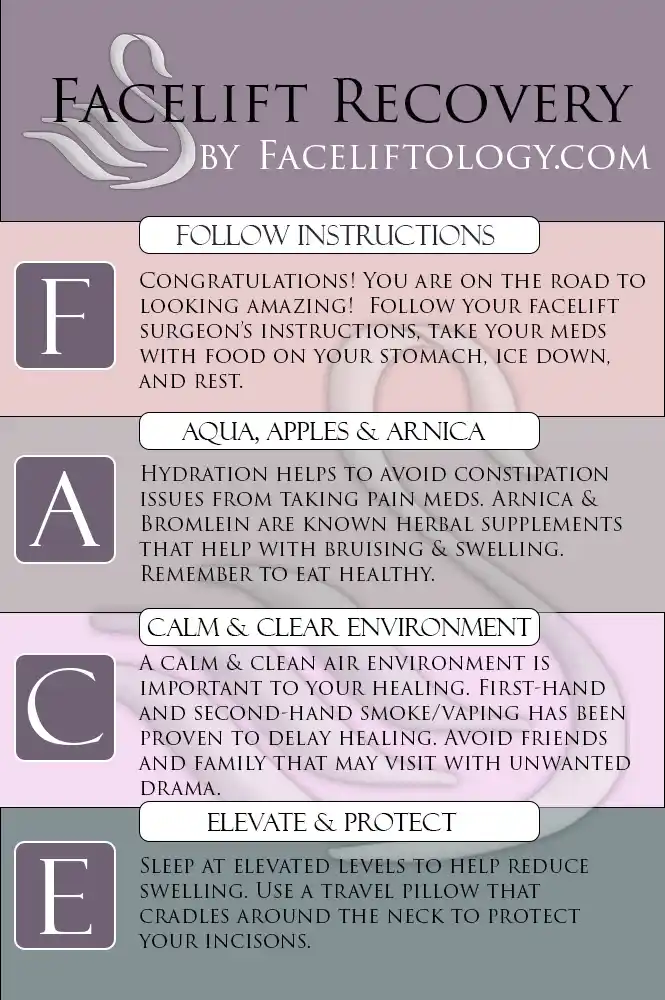
The F-A-C-E Guide to Facelift Recovery
- F
Follow Instructions – Be sure to gather written instructions from your surgeon specific to your procedure. These instructions should include an after-hours contact number should you have questions or need guidance regarding the surgeon’s instructions. Having these written instructions will also help your caregivers better understand your needs.
- A
Agua, Apples & Arnica – Hydration helps to avoid constipation issues from taking pain meds. Herbal supplements are often recommended by surgeons to help with bruising and swelling. Avoid junk food and eat healthy, including fruits and vegetables.
- C
Calm & Clear Environment – A calm and clean air environment is important to the healing process. First-hand and second-hand smoke/vaping has been found to delay healing. Also, avoid friends and family that may bring unwanted drama, or may be unsupportive of your cosmetic experience.
- E
Elevate & Protect – Sleeping elevated is known to help reduce swelling. Many patients have reported using a travel pillow to help protect themselves from side sleeping and putting pressure on the incisions.
Immediate Post-Operative Care After a Facelift
During the first few days after surgery, your surgeon will provide detailed instructions designed to protect the surgical area and reduce swelling. Although techniques vary among surgeons, many facelift patients can expect the following post-operative measures.
Surgical Dressings
At the conclusion of surgery, most facelift procedures involve placement of a protective head dressing.
This dressing:
- Applies gentle pressure to reduce swelling
- Protects surgical incisions
- Absorbs normal post-operative drainage
Many surgeons remove the bulky dressing the morning after surgery and replace it with a lighter one. Your surgeon may ask you to continue wearing this lighter dressing for several days to help control swelling and prevent fluid accumulation.
Following your surgeon’s instructions regarding dressings is an important part of recovery. Proper use of the dressing helps minimize swelling and bruising while supporting the tissues as they begin to heal.
If the dressing feels excessively tight or causes significant discomfort, contact your surgeon’s office for guidance.
Surgical Drains
Some facelift procedures involve placement of small surgical drains beneath the skin.
These drains help:
- Remove fluid that accumulates after surgery
- Reduce pressure beneath the skin
- Support smoother healing
Drains are usually removed within 24–48 hours after surgery. Removal typically feels unusual but is rarely painful.
Patients generally do not need to manage these drains themselves. They are typically secured within the surgical dressing until removal by the surgeon.
It is important not to pull on or attempt to remove the drains yourself. While they may feel unfamiliar or slightly uncomfortable, the drains help reduce swelling and pressure that can contribute to post-operative discomfort. If a drain becomes loose, causes concern, or feels painful, contact your surgeon’s office for guidance rather than attempting to adjust it yourself.
Head Elevation and Sleeping Position
Keeping the head elevated helps reduce post-operative swelling and promotes healthy circulation during the early healing phase.
Most surgeons recommend:
- Sleeping with two or three pillows
- Keeping the head at or slightly above heart level
- Avoiding sleeping on the side during early recovery
Many facelift patients report that using a travel neck pillow is particularly helpful while sleeping. The pillow gently cradles the neck, providing added support while also helping prevent rolling onto the side during the night.
Side sleeping is discouraged during the first week after surgery. Because swelling naturally responds to gravity, sleeping on one side can temporarily shift swelling toward that side of the face. This can create an uneven appearance that may concern patients who are not expecting it.
As many surgeons humorously remind their patients, “gravity has a sense of humor during facelift recovery.” Sleeping on your back with the head elevated helps swelling settle more evenly and supports a smoother healing process.
Pro Tip: Sleeping Comfortably After a Facelift
Many facelift patients find the first few nights of sleep to be the most challenging part of recovery. Creating a comfortable sleeping setup ahead of surgery can make the transition much easier.
Helpful strategies include:
- Using a travel neck pillow to stabilize the head and prevent rolling onto the side
- Sleeping with two or three pillows or a wedge pillow to maintain elevation
- Placing additional pillows on each side of the body to discourage turning during sleep
- Preparing your bed before surgery so everything is ready when you return home
Maintaining a stable sleeping position during the first week helps swelling resolve more evenly and reduces unnecessary pressure on the healing tissues.
Managing Swelling, Bruising and Discomfort
Swelling and bruising are expected after facelift surgery. Proper care during this phase helps the body recover more comfortably.
Cold Compresses and Ice Therapy
Cold therapy can help reduce swelling, bruising, and discomfort during the early days of facelift recovery. However, it is important to use cold compresses carefully.
Heavy ice packs should be avoided, as excessive weight or pressure on the face can increase discomfort and may contribute to additional swelling. Cold therapy should feel soothing and gentle, not heavy or painful.
Lightweight cooling options are typically best, such as:
- A small bag of crushed ice wrapped in a soft cloth
- A bag of frozen peas that molds gently to the face
For patients who have also undergone blepharoplasty, many surgeons recommend a particularly effective and comfortable method using cotton rounds soaked in ice water.
To do this:
- Place clean cotton rounds in a bowl of ice water
- Lightly squeeze out excess water
- Gently place the cool cotton rounds over the eyes
- Discard once they lose their cooling effect and replace with fresh rounds
This method provides a light, refreshing cooling sensation without placing pressure on delicate eyelid tissues. The clean cotton rounds can also help keep the incision areas fresh during early healing.
As with any part of your recovery, follow your surgeon’s instructions regarding the use of cold therapy.
Mild Bleeding and Drainage
Small amounts of oozing or drainage are common during the first day or two after surgery.
It is normal for surgical dressings to show light staining from blood or fluid.
However, patients should contact their surgeon if they experience:
- Rapid swelling
- Significant bleeding
- Increasing pressure or pain
Bleeding beneath the skin (hematoma) is uncommon but requires prompt medical evaluation.
Sutures and Incision Care
Most facelift incisions are carefully placed around the ears and sometimes beneath the chin, where they can be well concealed within natural contours of the face.
Suture removal typically occurs:
- 5–14 days after surgery for facelift incisions
- 4–7 days after surgery for eyelid surgery (blepharoplasty), if performed
During this time, patients are commonly instructed to:
- Clean incisions gently with hydrogen peroxide or sterile water using cotton swabs
- Apply a protective ointment such as Aquaphor to keep the incision sites moist and support proper healing
Because facelift incisions are located around the ears, some patients notice a temporary sensation that their ear canals feel clogged or full during early recovery. This feeling is usually caused by post-operative swelling in the surrounding tissues.
In some cases, a small amount of blood from surgery may also dry within the outer ear canal. This is generally harmless and not a cause for concern.
However, patients should not attempt to clean their ear canals themselves, especially during the first week of healing. Inserting cotton swabs or other objects into the ear canal may irritate healing tissues or disrupt nearby incisions.
If the sensation becomes uncomfortable or persistent, the safest approach is to discuss it with your surgeon, who can examine the area and provide guidance if cleaning is necessary.
As with all aspects of recovery, always follow your surgeon’s specific instructions regarding incision care.

Hair Care After Facelift Surgery
Hair and scalp care require temporary adjustments during facelift recovery. Because many facelift incisions are placed around the ears and within the hairline, proper hair care helps protect the healing tissues and prevent irritation.
Preparing Hair Before Surgery
Many surgeons recommend that patients schedule their regular hair color, highlights, or perm treatments about one week before surgery. This allows patients to maintain their usual hair routine before surgery, since chemical hair treatments are typically restricted for several weeks after a facelift.
Planning ahead helps avoid the frustration of needing hair services during the early recovery period when these treatments are not permitted.
Washing Hair After Surgery
Most patients may wash their hair after surgical drains are removed, which typically occurs about 24 hours after surgery.
Surgeons often recommend:
- Using baby shampoo, which is gentle and less irritating to healing skin
- Washing the hair gently without vigorous rubbing
- Avoiding scrubbing near incision sites
Many patients find it helpful to have their hairstylist assist with washing their hair during the first week of recovery.
Patients who accidentally use their regular shampoo quickly learn why baby shampoo is recommended. Standard shampoos often contain fragrances and chemicals that can burn or irritate healing incisions.
Hair products such as hair spray, gels, or styling creams should also be avoided during early recovery.
Hair Drying and Styling
Hair dryers are usually restricted for several weeks after facelift surgery.
This restriction exists for an important reason: the skin around facelift incisions is often temporarily numb after surgery. Because of this numbness, patients may not be able to feel when heat from a hair dryer becomes too hot. Excess heat can irritate healing tissues before the patient realizes it.
When hair dryers are eventually permitted, patients should:
- Use the lowest heat setting
- Keep the dryer away from incision areas
Temporary changes in hair texture or fullness can sometimes occur after surgery due to surgical stress, but this usually improves within a few weeks.
Avoid Tight Hair Accessories
Patients often try to keep hair away from their incisions, which is helpful. However, tight hair bands, clips, or aggressive pulling of the hair should be avoided.
Pulling the hair too tightly can place stress on healing incisions around the ears and hairline.
Pro Tip: Keep Hair Away from Incisions
Keeping hair away from incision sites is important for proper healing. Hair can act as a foreign body if it becomes trapped within an incision, which may irritate the area or slow healing.
Gently keeping the hair away from incision lines without pulling or tension helps support a smoother recovery.
Skin Care During Facelift Recovery
The skin often feels dry, tight, or sensitive during the healing phase after facelift surgery. This occurs as swelling resolves and the skin adjusts to the repositioned tissues beneath it.
While it may be tempting to resume normal skin care routines right away, patients should always consult with their surgeon before using any skin care products following surgery. Many surgeons have specific post-operative skin care protocols designed to support healing and protect delicate tissues during the early recovery period.
Using the wrong products too soon can irritate incisions, increase inflammation, or interfere with the healing process.
Gentle Moisturizing
Once permitted by your surgeon, using a gentle, fragrance-free moisturizer can help relieve dryness and restore comfort to the skin. Many surgeons recommend simple, non-irritating products such as Eucerin or similar medical-grade moisturizers.
Because some areas of the face may remain temporarily numb during recovery, patients should take extra care when applying products to avoid excessive pressure or irritation.
Avoid Skin Care Devices and Treatments
Patients should avoid using skin care devices or facial treatment tools during early recovery unless specifically approved by their surgeon.
This includes devices such as:
- LED light therapy masks
- Facial massaging devices
- Radiofrequency or skin-tightening devices
- Microcurrent devices
- Facial rollers or sculpting tools
Although these products are often marketed for skin rejuvenation, using them too soon after surgery can increase swelling, bruising, and irritation of healing tissues.
During facelift recovery, the priority should always be allowing the tissues to heal naturally without unnecessary stimulation.
Avoid Facial Massage During Early Healing
Patients are sometimes surprised to learn that facial massage is usually discouraged during the early healing phase after a facelift.
This is particularly important for patients who have also undergone facial fat grafting, which is commonly performed during facelift procedures to restore youthful volume.
Fat grafts require time to establish a new blood supply within the surrounding tissues. Excessive pressure or massage during early recovery may interfere with this process and can potentially cause the grafted fat to dissolve rather than successfully integrate into the tissues.
For this reason, facial massage should only be performed if and when your surgeon specifically recommends it. There is a time for facial massage after facelift surgery, BUT ONLY at your surgeon’s direction.
Surgeon Insight
“When facial fat grafting is performed during a facelift, the grafted fat cells require time to establish a new blood supply. Massaging the face too early can interfere with this process and reduce the survival of the grafted fat.”
Keep Skin Care Simple During Healing
In the early weeks after facelift surgery, the best approach to skin care is often the simplest one. Gentle cleansing, basic moisturizing, and following your surgeon’s instructions will help support proper healing while minimizing irritation.
As recovery progresses, your surgeon can guide you on when it is safe to gradually reintroduce your normal skin care routine or professional treatments.
Pro Tip: When in Doubt, Ask Your Surgeon
The skin may appear healed on the surface before the deeper tissues have fully recovered. When considering any skin care product, device, or treatment after facelift surgery, it is always safest to consult your surgeon first.
A conservative approach to skin care during the early healing period helps protect your surgical results and supports the best possible long-term outcome.
Sun Protection and Makeup
Protecting healing skin from sun exposure is an important part of facelift recovery. Newly healing skin and incision lines are particularly sensitive to ultraviolet (UV) light, which can cause scars to darken and take longer to fade.
When to Begin Using Sunscreen
Patients should not apply sunscreen directly over incisions until the skin has healed sufficiently, which is typically about 10–14 days after surgery. Applying sunscreen too early may irritate healing incision sites.
Always follow your surgeon’s instructions regarding when it is safe to begin applying sunscreen.
Once permitted, patients should:
- Use a broad-spectrum sunscreen with SPF 30 or higher
- Apply sunscreen to exposed areas before going outdoors
- Reapply as needed when spending time outside
Consistent sun protection helps support better scar healing and overall skin recovery.
Protecting the Face From Sun Exposure
During the early weeks of recovery, physical sun protection is often more comfortable than relying on sunscreen alone.
Many facial surgeons recommend protective accessories such as:
- Oversized sunglasses that help shield the eyes and temples from sunlight
- Wide-brimmed hats that provide shade for the face and neck
- Light scarves that can be used to protect the neck or lower face
When wearing hats, patients should choose styles that do not place pressure on the incisions above the ears. Tight-fitting hats or rigid hat bands may rub against these areas and should be avoided during early recovery.
Clothing for Sun Protection and Bruising
During the first week after surgery, some patients prefer clothing that can help conceal temporary bruising while protecting the skin from sun exposure.
Common choices include:
- Light scarves wrapped loosely around the neck
- Soft turtlenecks or high-collar shirts
These options can help protect healing skin while providing patients with additional confidence when going out during early recovery.
When Makeup Is Safe to Use
Patients should not apply makeup after facelift surgery until their surgeon specifically approves it.
Although many patients are eager to camouflage bruising during recovery, applying makeup too soon can introduce bacteria and debris into healing incision sites. In the early stages of recovery, surgical incisions are still vulnerable, and cosmetic products can act much like dirt if they come into contact with these areas.
Applying makeup before the skin has adequately healed can increase the risk of irritation, inflammation, and infection.
Because every patient heals at a different pace, the appropriate time to begin using makeup varies. For this reason, patients should wait for their surgeon to confirm that the incisions have healed enough to safely tolerate cosmetic products.
Patient compliance with this instruction is extremely important. Protecting the incision sites during the early healing period helps reduce the risk of complications and supports the best possible surgical outcome.
If you are unsure whether it is safe to begin using makeup, the safest course is always to consult your surgeon before applying any cosmetic products.
Pro Tip: When in Doubt, Ask Your Surgeon
The skin may appear healed on the surface before the deeper tissues have fully recovered. When considering any skin care product, device, or treatment after facelift surgery, it is always safest to consult your surgeon first.
A conservative approach to skin care during the early healing period helps protect your surgical results and supports the best possible long-term outcome.
Physical Activity After a Facelift
While light movement is encouraged during recovery, strenuous physical activity should be avoided during the early healing phase.
In the first few weeks after surgery, the facial tissues are still stabilizing. Activities that significantly increase blood pressure or place strain on the face and neck can contribute to increased swelling, bruising, or bleeding beneath the skin.
Light Movement Is Beneficial
Gentle movement helps maintain healthy circulation and reduce stiffness during recovery.
Most surgeons encourage:
- Light walking beginning shortly after surgery
- Moving around the home periodically rather than remaining completely sedentary
However, these activities should remain slow and relaxed during the first week of healing.
Avoid Heavy Lifting and Straining
Patients should avoid heavy lifting, strenuous exercise, or activities that require significant physical effort for several weeks after surgery.
Straining the body increases blood pressure and can place pressure on healing facial tissues. This may lead to:
- Increased swelling
- Additional bruising
- Prolonged recovery
For this reason, many surgeons recommend avoiding strenuous exercise and heavy lifting for approximately three weeks, or until your surgeon advises it is safe to resume.
Avoid Leaning Forward or Facing Downward
Patients should also avoid leaning forward with the head facing downward, especially during the first week after surgery.
Positions such as bending over to pick something up or leaning forward toward the ground can increase blood flow and gravitational pressure in the face. This may worsen swelling and contribute to additional bruising.
Instead of bending forward, patients should bend at the knees and squat down when reaching for items near the floor.
Gradual Return to Normal Activity
Most patients can gradually resume normal daily activities as swelling improves and healing progresses. However, returning to work, exercise routines, or physically demanding tasks should always be discussed with your surgeon first.
Following these activity guidelines helps protect the healing tissues and supports a smoother recovery.
Surgeon Insight
“In our experience, most recovery complications after facelift surgery are not caused by the surgery itself. They occur when patients unknowingly interfere with the healing process by following incorrect advice or resuming normal habits too soon.”
Tobacco, Nicotine and Second-Hand Exposure
Nicotine is one of the most harmful substances for healing after facelift surgery. For this reason, plastic surgeons place strong restrictions on all forms of nicotine use before and after surgery.
Nicotine causes powerful constriction of the small blood vessels that supply the skin. These vessels are critical for delivering oxygen and nutrients to healing tissues. When blood flow is reduced, the skin and incision sites may struggle to heal properly.
Because facelift surgery involves lifting and repositioning delicate facial tissues, healthy circulation is essential for safe recovery.
Potential Effects of Nicotine on Facelift Healing
Nicotine exposure can lead to several serious healing problems, including:
- Delayed incision healing
- Increased risk of infection
- Poor scar quality, including thick or widened scars
- Skin blistering or tissue breakdown in severe cases
Even small amounts of nicotine can interfere with the body’s ability to heal.
All Nicotine Products Must Be Avoided
Patients should avoid all nicotine-containing products, including:
- Cigarettes
- Vaping devices and e-cigarettes
- Nicotine gum or patches
- Smokeless tobacco products
Many surgeons require patients to completely stop nicotine use at least 4–6 weeks before surgery and continue avoiding it throughout the recovery period.
Second-Hand Smoke and Vapor Matter Too
Patients are sometimes surprised to learn that second-hand exposure to nicotine products can also affect healing.
Being around cigarette smoke or vaping vapor can still expose the body to nicotine and other harmful substances that reduce blood flow to healing tissues.
For this reason, surgeons often advise patients to avoid environments where others are smoking or vaping during recovery.
Honesty With Your Surgeon Is Critical
Some patients feel tempted to minimize or hide nicotine use before surgery. However, it is extremely important to be completely honest with your surgeon about any nicotine exposure.
Surgeons ask about nicotine use not to judge patients, but to protect their safety and ensure the best possible surgical outcome.
Avoiding nicotine before and after surgery gives your body the best chance to heal properly and helps support the best long-term aesthetic results.
Surgeon Insight
Nicotine is one of the biggest causes of facelift healing complications, and many patients underestimate the risk or assume that “cutting back” or vaping doesn’t count.
Common Sensations During Facelift Recovery
Several physical sensations are normal as the body heals.
Temporary Numbness
Small sensory nerves are affected during surgery when skin is lifted from underlying tissues.
Temporary numbness is common and usually improves gradually over 2–6 months as nerves regenerate.
Tightness in the Neck and Face
Patients frequently notice a feeling of tightness after surgery.
This occurs because:
- Facial muscles and tissues are tightened during surgery
- Swelling shifts downward during early healing
The sensation typically improves within one to two weeks.
If tightness becomes progressively worse, contact your surgeon.
Tingling, Itching, or Burning
As nerves regenerate, patients may feel:
- Tingling
- Itching
- Mild burning sensations
- Brief “electric” sensations
These sensations are part of normal nerve recovery and generally improve over time.
Firmness Beneath the Skin
Areas of firmness or small lumps beneath the skin are common during healing.
These areas usually soften gradually. In some cases, surgeons may recommend gentle massage to help the tissues settle.
Always follow your surgeon’s instructions before beginning massage.
Uneven Swelling
It is common for one side of the face to appear slightly more swollen than the other during recovery.
This usually resolves naturally as swelling decreases. Sleeping position can sometimes contribute to temporary asymmetry.
However, patients should contact their surgeon if swelling becomes significantly worse on one side.
Surgeon Insight
Nicotine is one of the biggest causes of facelift healing complications, and many patients underestimate the risk or assume that “cutting back” or vaping doesn’t count.
Eye Symptoms After Facelift Surgery
Even when eyelid surgery (blepharoplasty) is not performed, facelift surgery can still affect the eye area during recovery. This occurs because swelling in the surrounding facial tissues can temporarily influence how the eyelids function and how the eyes maintain their natural moisture balance.
Many patients experience temporary eye-related symptoms during the early stages of healing.
Common symptoms may include:
- Tightness around the eyelids
- Mild blurred vision caused by protective ointments used during surgery
- Eye dryness or irritation
- Excessive tearing or watery eyes
Why Watery Eyes Can Occur
Patients are often surprised to learn that watery eyes are frequently a symptom of dry eye.
When the surface of the eye becomes dry or irritated, the body may produce reflex tearing in an attempt to compensate for the dryness. This can create the sensation of constantly watering eyes even though the underlying issue is insufficient lubrication of the eye surface.
Swelling around the eyelids after facial surgery may also temporarily affect blinking and the natural distribution of tears across the eye.
Managing Eye Dryness During Recovery
To help keep the eyes comfortable during recovery, surgeons often recommend:
- Lubricating artificial tear drops during the day
- Protective eye ointments used at night (often referred to as PM eye ointments)
These products help maintain moisture on the surface of the eye and reduce irritation while the tissues heal.
Preventing Eye Rubbing During Sleep
When the eyes feel dry or irritated, many patients instinctively rub them without realizing it — particularly during sleep.
Rubbing the eyes after facial surgery can place pressure on delicate tissues around the eyelids and cheeks, potentially increasing swelling or irritating nearby incision areas.
For patients who tend to rub their eyes during sleep, some surgeons recommend wearing soft cotton gloves at night during the early stages of recovery. The gloves act as a gentle barrier that helps prevent unconscious rubbing and protects the healing tissues.
When to Contact Your Surgeon
Eye dryness and mild tearing usually improve as swelling resolves during recovery. However, if symptoms become persistent, uncomfortable, or worsen, patients should discuss the issue with their surgeon.
Your surgeon may recommend specific eye drops, ointments, or additional measures to help protect the eyes during healing.
Surgeon Insight
Nicotine is one of the biggest causes of facelift healing complications, and many patients underestimate the risk or assume that “cutting back” or vaping doesn’t count.
Clothing Considerations During Recovery
Simple wardrobe adjustments can help protect surgical incisions.
Patients are typically advised to wear:
- Button-up shirts
- Zip-front clothing
Pullover garments may accidentally catch incisions around the ears and should be avoided during early recovery.
Why Bruising Sometimes Moves Downward During Facelift Recovery
One of the more surprising aspects of facelift recovery is that bruising does not always remain in the area where surgery was performed. In fact, many patients notice that bruising may appear to move downward during the first week of healing.
This occurs because of gravity and the body’s natural healing processes.
As swelling begins to resolve, small amounts of blood trapped beneath the skin gradually break down and move through the surrounding tissues. Because gravity pulls fluid downward, bruising that originally formed near the cheeks or jawline may slowly migrate toward the lower face, neck, or even the upper chest area.
Although this can look concerning, it is usually a normal and temporary part of recovery.
Over time, the body naturally reabsorbs this bruising as healing progresses. The color may change from purple or blue to green, yellow, or light brown before gradually fading.
When Bruising Is Normal
Bruising that:
- Gradually changes color
- Slowly fades over several days or weeks
- Moves downward toward the neck or chest
is generally considered part of the normal healing process.
When to Contact Your Surgeon
Patients should contact their surgeon if bruising:
- Appears suddenly with rapid swelling
- Is accompanied by severe or worsening pain
- Continues to expand quickly
These symptoms may require evaluation to ensure proper healing.
A Helpful Reminder
During facelift recovery, gravity often has a noticeable effect on swelling and bruising. What may appear unusual at first is frequently just the body’s normal way of processing the healing process.
If you are unsure whether something is normal, contacting your surgeon’s office is always the safest approach.
What Is Normal After a Facelift and When to Call Your Surgeon
Facelift recovery involves a number of physical changes as the body heals. Many sensations and temporary changes can feel unfamiliar, especially during the first week after surgery. Understanding what is normal during recovery can help patients feel more confident and avoid unnecessary worry.
However, it is equally important to recognize symptoms that may require prompt communication with your surgeon.
Normal Experiences During Facelift Recovery
Most patients experience several common symptoms during the early healing phase.
These may include:
- Swelling and bruising, particularly during the first week
- Mild oozing or drainage from incision sites
- Temporary numbness of the cheeks, ears, or neck
- Tightness in the face or neck as tissues settle into their new position
- Firmness or small lumps beneath the skin as healing progresses
- Mild asymmetry in swelling, where one side of the face appears slightly more swollen than the other
- Tingling, itching, or “electric” sensations as nerves regenerate
These sensations are part of the normal surgical wound healing process and typically improve gradually over the weeks following surgery.
When to Contact Your Surgeon
Although complications after facelift surgery are uncommon, patients should always contact their surgeon if something feels concerning.
Call your surgeon if you experience:
- Sudden or rapidly increasing swelling, particularly on one side of the face
- Severe or worsening pain not relieved by medication
- Significant bleeding or expanding bruising
- Persistent fever or chills
- Drainage that appears thick, yellow, or foul-smelling
- Skin discoloration that becomes dark or blistered
- Difficulty breathing or swallowing
Your surgeon would always prefer to hear from you early if there is a concern. Prompt communication allows potential issues to be evaluated and addressed quickly.
When in Doubt, Ask
Recovery after facial surgery can involve many unfamiliar sensations. If something feels unusual or causes concern, the safest approach is always to contact your surgeon’s office for guidance.
A quick call can provide reassurance and help ensure that your healing process stays on track.
How painful is facelift recovery?
Most patients report very little pain after facial plastic surgery with pain usually subsiding after a few days. Patients report being more annoyed with discomfort than pain. Pain is usually experienced around the ears where the incisions are and tightness in the neck.
What Not to do After Facelift:
- Wearing make-up too soon.
- Exposing yourself to nicotine during healing.
- Sleeping on your side.
- Wearing earings too soon.
- Not cleaning your incisions and/or keeping hair out of incisions.
- Doing too much during healing period.
- Not staying hydrated; getting constipated.
How to reduce facelift swelling
Most patients report use of arnica and bromelain as helpful to reducing swelling and bruising. Avoiding known factors that can cause more bruising and swelling is important to keeping swelling under control such as avoiding any heavy lifting, low stress environment, proper diet and hydration. Read more about potential ways to improve facelift healing.