
Facelift Healing Timeline: The Stages of Recovery After Surgery
Facelift Recovery Timeline: Day-by-Day Healing Guide
The Stages of Facelift Healing
What Is Facelift Recovery Like?
Facelift recovery occurs in stages. While the overall healing process follows predictable patterns, every patient heals somewhat differently depending on factors such as overall health, surgical technique, adherence to post-operative instructions, and individual healing response.
Understanding what typically occurs during each phase of recovery can help patients feel more comfortable and confident during the healing process.
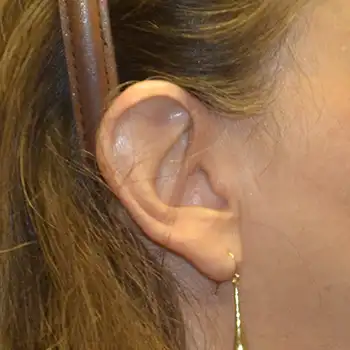
Photos shows ear contour before facelift.
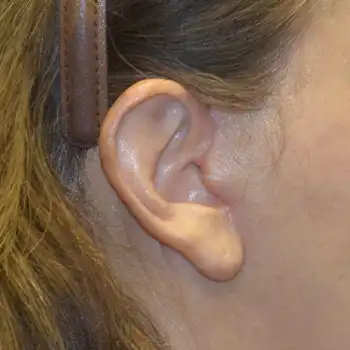
Photo shows facelift scar 21 days after surgery.
Facelift Healing Timeline at a Glance
While every patient heals at a slightly different pace, facelift recovery generally follows a predictable pattern. Understanding these phases can help patients know what to expect as healing progresses.
Typical facelift recovery milestones include:
Day of Surgery
Patients return home to rest with a protective dressing in place. Swelling and mild drainage are common during the first 24 hours.
First 24–48 Hours
Follow-up visits may occur to monitor early healing. Dressings or surgical drains may be removed depending on the surgeon’s protocol.
First Few Days
Swelling and bruising begin to develop. Patients follow strict incision care instructions and avoid activities that increase blood pressure or place pressure on the face.
One Week
Some sutures may begin to be removed. Bruising and swelling often migrate downward toward the neck as gravity influences the healing process.
Two Weeks
Most sutures are typically removed. Patients may gradually resume normal activities, though incisions remain sensitive and require continued care.
One Month
Most bruising has resolved. Swelling continues to improve, though subtle swelling and tightness may still be present.
Two to Six Months
Incisions continue to mature and gradually fade. Numbness may slowly resolve as sensory nerves recover.
The Day of Surgery
The day of surgery is usually the most disorienting part of recovery. Patients often feel groggy as anesthesia wears off and are eager to return home to rest.
Before leaving the surgical center, the medical staff will monitor your condition and ensure you are stable for the ride home. This includes checking your surgical dressing and making sure you are not experiencing nausea.
Once home, the dressing around your head may feel bulky or tight, often similar to an elastic compression bandage. While it may feel uncomfortable, it serves an important purpose. The dressing helps reduce swelling and bleeding during the first 24 hours, when these symptoms are typically at their peak.
Patients should not remove the dressing unless instructed by their surgeon.
Sleeping on your back with your head elevated is especially important during this first night of recovery.
Incision appearance:
Fresh with sutures present. Incisions may appear raw and may produce a small amount of blood or fluid drainage.
The Day After Facelift Surgery
Many surgeons schedule a follow-up visit the day after surgery. This appointment allows the surgeon to assess early healing and ensure the first night of recovery progressed normally.
During this visit:
- The dressing may be removed and replaced
- Surgical drains may be removed if they were placed
- The surgeon will check swelling and incision condition
Some surgeons place drains to prevent fluid accumulation beneath the skin during the early healing phase.
Incision appearance:
Still raw with sutures in place. Mild drainage may continue.
The First Few Days After Surgery
During the first several days of recovery, patients will follow very specific post-operative care instructions provided by their surgeon.
These instructions often include daily incision cleaning and gentle hair washing.
Most surgeons recommend washing the hair with baby shampoo only. Standard shampoos often contain ingredients that can burn or irritate healing incisions. Many patients discover this the hard way when they attempt to use their normal shampoo too soon.
Hair dryers are also typically discouraged during early recovery. Because incision areas remain numb, patients may not feel excessive heat from a hair dryer until irritation has already occurred.
Incision care commonly includes:
- Cleaning the incision with cotton swabs and warm water or hydrogen peroxide
- Applying a protective ointment such as Aquaphor®
- Covering incisions with non-adherent pads such as Telfa® before applying a bandage
If significant bleeding or sudden swelling occurs, patients should contact their surgeon immediately for guidance.
Incision appearance:
Sutures present. Incisions are pink and sensitive. Small amounts of drainage may still occur.
One Week After Facelift Surgery
Around one week after surgery, surgeons often begin removing some sutures. However, this does not mean the incisions are fully healed.
Incision care should continue exactly as instructed until all sutures are removed.
Many patients also begin noticing the effects of gravity during this stage of recovery. Bruising and swelling often migrate downward into the neck area. This is a normal part of healing and occurs as fluids settle and are gradually reabsorbed by the body.
By this point, many patients feel comfortable leaving the house for short outings while wearing sunglasses and a scarf to protect healing areas.
Hats may be worn cautiously, but they should not place pressure on the incisions around the ears.
Protecting the ears during recovery is particularly important. It is also common for patients to notice small amounts of dried blood in the ear canal that collected during surgery.
Incision appearance:
Healing continues. Incisions remain pink and sensitive with areas of numbness.
Two Weeks After Facelift Surgery
By two weeks after surgery, most sutures have been removed. Although the surface of the incisions may appear improved, the deeper layers of tissue are still healing. Patients should continue to handle the area carefully.
Hair styling tools such as hair dryers, curling irons, and hot rollers should still be used cautiously or avoided unless approved by the surgeon.
Many surgeons allow patients to begin wearing makeup around this time. However, cosmetics should never be applied directly onto incision sites unless specifically approved by the surgeon, as this is a common cause of post-operative infections.
Swelling may still appear uneven from one side of the face to the other. This is often related to sleeping position and the natural movement of swelling due to gravity.
Incision appearance:
Pink with gradual return of sensation.
One Month After Facelift Surgery
By the one-month mark, most bruising has resolved. Remaining bruising may appear yellow as the body finishes breaking down the last traces of blood beneath the skin.
Some swelling may still be present, and the face may continue to feel tight or firm as tissues adjust to their new position.
Incisions are still healing internally, and numbness around the ears or cheeks may persist.
Depending on healing progress, surgeons may or may not allow patients to resume wearing earrings.
Incision appearance:
Pink with areas of numbness. Earlobes may still feel sensitive.
Two to Six Months After Facelift Surgery
During this phase, the deeper healing process continues. Scar tissue gradually remodels as the body strengthens the incision areas.
Sun protection becomes extremely important during this stage. Exposure to ultraviolet light can cause scars to darken and may prevent them from fading properly.
Patients should continue to avoid nicotine exposure and maintain healthy habits that support healing.
It is not unusual for some numbness to persist for several months after surgery. Sensation often returns gradually as small sensory nerves regenerate.
The appearance of incisions evolves over time as part of the normal scar maturation process. They typically transition through several phases:
- Early pink and sensitive
- Firmer as scar tissue develops
- Gradually softening and fading
- Becoming lighter and less noticeable over time
Healing takes patience. Facelift results continue to improve as swelling resolves and tissues settle.
Examples of Facelift Scars and Various Stages of Healing
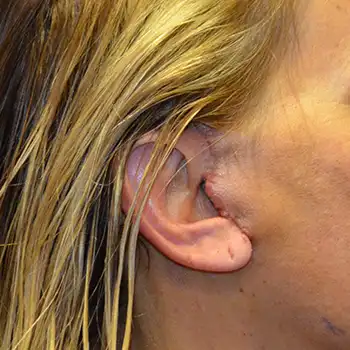
Facelift scar 7 days after surgery – sutures were removed on this day just before photo was taken.
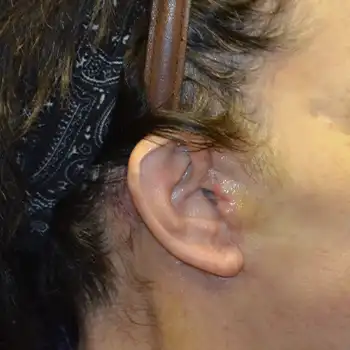
Facelift scar at 10 days after surgery
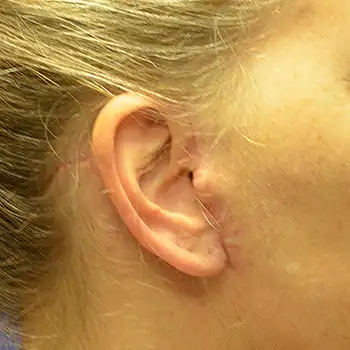
Facelift scar shown at 2 weeks after surgery.
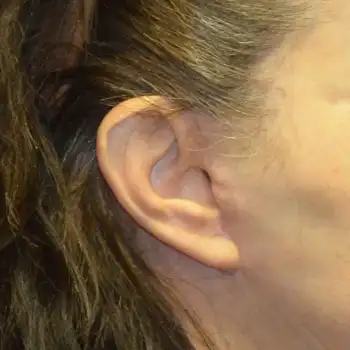
Facelift scar shown is 6 weeks after surgery.
Understanding the Recovery Process
Understanding the natural stages of facelift healing can make recovery far less stressful. Many of the changes patients experience during the first weeks are normal and temporary.
For a more detailed overview of post-operative care instructions and recovery tips, see our Facelift Recovery Guide.
Facelift Healing Timeline FAQ
When does swelling peak after a facelift?
Facelift swelling typically peaks between the second and third day after surgery. This occurs as the body’s inflammatory response reaches its highest point. Swelling gradually improves during the first week, although mild swelling may persist for several weeks while deeper tissues continue healing.
Why do facelift results look worse before they look better?
During the early stages of healing, swelling, bruising, and tissue tightness can temporarily obscure the final surgical results. As swelling decreases and bruising fades, the improvements from the facelift become more visible.
When do facelift results start to look natural?
Many patients feel comfortable going out in public within two to three weeks after surgery. However, final facelift results continue refining over several months as swelling resolves and scars mature.
Medical Disclaimer – Faceliftology®
The information provided on Faceliftology® is intended for general educational and informational purposes only and reflects general medical concepts related to facial aging and facelift procedures. It is not intended to constitute medical advice, diagnosis, or treatment recommendations, nor does it establish a physician–patient relationship.
Faceliftology® is an independent educational platform. Any medical or surgical information presented, including content that is reviewed or contributed to by a physician, is provided in a general context and does not represent individualized medical guidance.
Facelift surgery and related facial procedures involve highly individualized decision-making based on a patient’s anatomy, medical history, surgical technique, and overall health status. Outcomes, recovery timelines, and healing responses vary significantly between individuals and cannot be predicted or guaranteed.
Discussion of surgical techniques, adjunctive therapies, recovery strategies, nutritional considerations, or postoperative care reflects general principles described in clinical practice and medical literature. Such information does not imply that any specific approach is appropriate, necessary, or effective for a particular patient.
Users of this website should not rely on any content as a substitute for consultation with a qualified healthcare provider. All medical decisions, including whether to undergo surgery or pursue any aspect of preoperative or postoperative care, should be made in direct consultation with a board-certified plastic surgeon or other appropriately trained medical professional.
By using this website, you acknowledge that any reliance on the information provided is at your own discretion and risk.
Faceliftology® does not endorse or promote any specific treatment, provider, product, or technique unless explicitly stated. Inclusion of information does not imply superiority over other medically accepted approaches.
In the event of a medical concern, complication, or unexpected symptom, individuals should seek prompt evaluation by their surgeon or a qualified healthcare provider.
Content on this website may not reflect the most current medical developments and should not be interpreted as comprehensive or definitive medical guidance.